
Affiliate marketing is one of the most talked-about ways to earn money online, yet it’s also one of the most misunderstood. Some influencers and gurus describe it as an easy shortcut to passive income, while others dismiss it as a scam. The truth sits quietly in between—and that’s exactly where beginners need clarity.
Most confusion exists because the answer of what is affiliate marketing is often explained in pieces. You hear about links, commissions, traffic, platforms, and tools, but rarely how all of these pieces fit together in a realistic way. Without that structure, beginners either jump in with the wrong expectations or give up too early.
This article explains affiliate marketing clearly, calmly, and completely. You’ll learn what it actually is, how it works behind the scenes, what beginners must understand before starting, and how to approach it as a real long-term system—not a hype-driven shortcut. You’ll also discover the hidden strategy that separate successful affiliates from those who struggle.
What Affiliate Marketing Actually Is
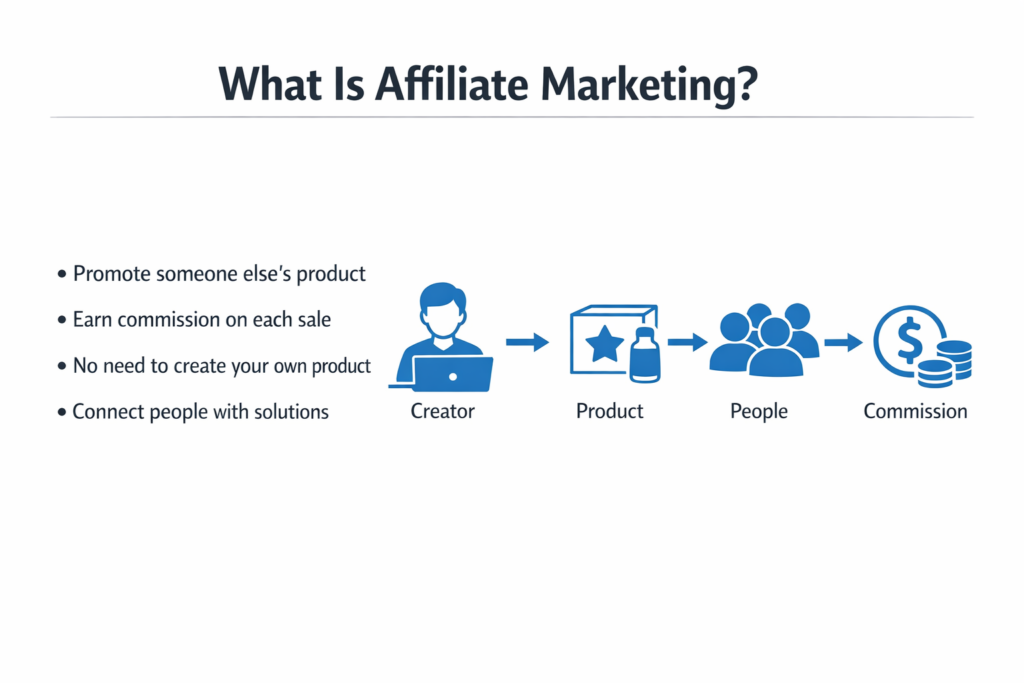
Affiliate marketing is a performance-based business model where you promote a product or service created by someone else and earn a commission when a sale happens through your recommendation. You are not creating the product, handling payments, or managing customer support.
At its core, affiliate marketing works on trust and relevance. When someone follows your content because they find it useful, they are more likely to consider products you recommend—especially when those products solve a specific problem they already have. This isn’t about manipulation or aggressive selling. It’s about becoming a trusted bridge between problems and solutions.
In simple terms:
- You share valuable content that genuinely helps people
- You recommend a relevant product that solves their specific problem
- You earn a commission if someone buys through your recommendation
No selling pressure. No cold pitching. Just aligned recommendations.
The beauty of this model is that all three parties benefit: the business gets a customer, the buyer discovers a solution they needed, and you get compensated for making a valuable connection. When affiliate marketing feels uncomfortable or pushy, it’s usually because this alignment is missing.
How Affiliate Marketing Works Step by Step
Affiliate marketing follows a straightforward process, but each step matters. Missing one breaks the entire system. Understanding this flow prevents the most common beginner mistakes.
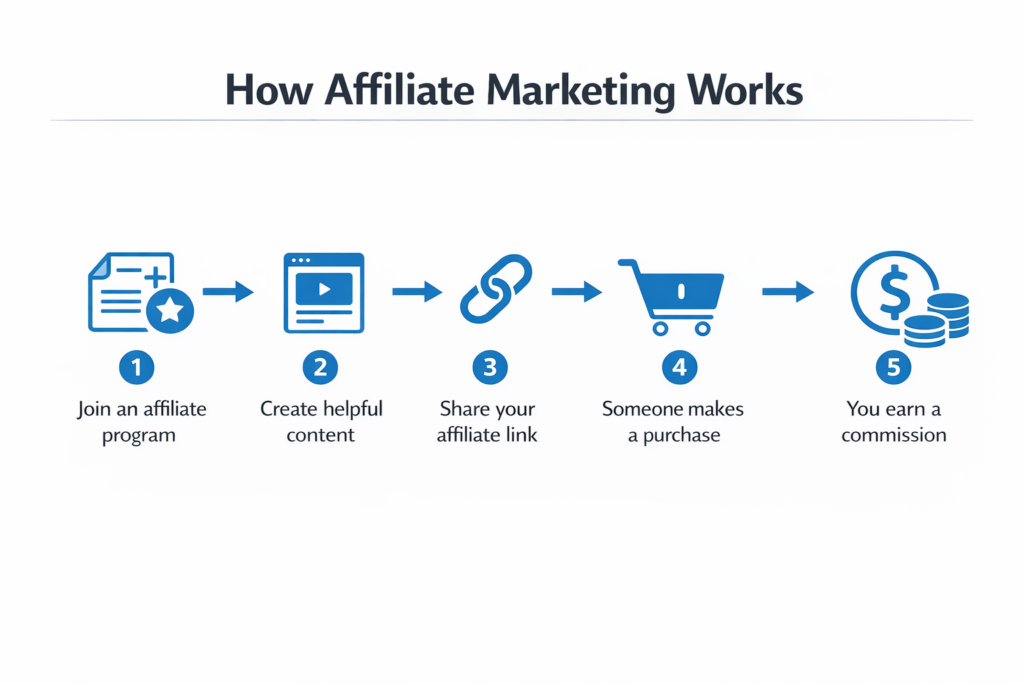
- You join an affiliate program and receive a unique tracking link
- You create content that educates or solves a problem
- A reader or viewer clicks your affiliate link
- The platform tracks the click using cookies or other technology
- You earn a commission if a purchase is completed within the tracking window
Key components involved in this process:
- Affiliate link: tracks referrals and attributes sales to you
- Merchant: company selling the product or service
- Commission: your earnings per sale (percentage or flat rate)
- Cookie duration: how long tracking lasts after someone clicks your link
Understanding this flow is essential before trying to scale anything. Many beginners focus only on getting clicks, forgetting that the real work happens in steps 1 and 2—choosing the right program and creating genuinely helpful content.
Why Affiliate Marketing Is Often Misunderstood
Most misunderstandings come from incomplete or exaggerated explanations. Beginners are often shown outcomes without being shown the process that leads to those outcomes. They see the destination but never the map.
Affiliate marketing is not:
- Instant income that appears overnight
- Fully passive at the beginning (or even after you start earning)
- Guaranteed without effort, strategy, or continuous learning
It is:
- Content-driven and depends on your ability to provide value
- Trust-dependent, requiring genuine relationships with your audience
- Long-term by design, rewarding consistency over quick wins
When these realities are skipped, expectations become unrealistic. People don’t tell these points as reality don’t get attention and lies spread like fire. You need to know this reality before taking any step and get that clarity that every business require consistent efforts regardless of seeing results for months. The people who succeed in affiliate marketing treat it like a real business, not a side hustle they can ignore for weeks at a time.
What Makes Affiliate Marketing Legit (Not a Scam)
Affiliate marketing is widely used by legitimate companies across industries. Software companies, e-commerce brands, education platforms, and service providers all rely on affiliates as part of their marketing strategy. Amazon, one of the world’s largest companies, has run an affiliate program since 1996.
The model works because it creates mutual benefit:
- Businesses only pay for results, making it risk-free marketing
- Creators are rewarded for influence and the value they provide
- Audiences get informed recommendations from sources they already trust
It becomes problematic only when people promote products they don’t understand or don’t align with their audience. A fitness creator promoting cryptocurrency software makes no sense and break trust immediately. The model itself is neutral—how it’s used determines the outcome.
Legitimate affiliate marketing looks like a tech reviewer recommending editing software they actually use, a cooking blogger linking to kitchen tools they’ve tested, or a business consultant recommending productivity apps they rely on daily.
Affiliate Commissions
Understanding how affiliate commissions work changes how you approach the entire model. Not all affiliate programs are created equal, and the commission structure directly affects your strategy.
Commission models vary widely:
- Percentage-based: You earn 5-50% of the sale price (common in digital products)
- Flat-rate: Fixed amount per sale regardless of product price
- Recurring: Monthly commissions for subscription services
- Tiered: Higher percentages as you generate more sales
Digital products and services typically offer higher commissions (30-50%) because there are no physical costs to fulfill. Physical products usually range from 3-10% because margins are tighter. Recurring commissions from subscription services can create genuinely passive income over time.
The best commission isn’t always the highest number. A $100 product with 40% commission sounds better than a $1,000 product with 5% commission—until you realize the second one pays $50 per sale instead of $40, and premium products often require similar effort to promote.
Platforms Used for Affiliate Marketing (And How to Choose One)
There is no single “best” platform for affiliate marketing. The right platform depends on where your audience already searches for information and how they prefer to consume content.
Common platforms include:
- Blogs: ideal for search-based learning and detailed explanations
- YouTube: perfect for demonstrations, reviews, and visual explanations
- Instagram/TikTok: works for product discovery and lifestyle integration
- Email newsletters: effective for building direct relationships and trust
- Pinterest: strong for how-to content and visual products
Instead of asking “Which platform pays more?”, beginners should ask:
Where do people look when they want help with this problem?
Your platform choice should match with your customer presence, not trends. Someone researching “best noise-canceling headphones for travel” is likely searching on Google or YouTube. Someone discovering fashion products might browse Instagram. Someone looking for business software probably reads industry newsletters. and lastly someone searching for home decor would be searching on Pinterest.
The platform matters less than your ability to show up consistently where your audience already spends time.
Types of Content That Work in Affiliate Marketing
Affiliate marketing does not work with random posting. Content must be intentional and helpful, designed to meet people at the exact moment they’re looking for solutions.
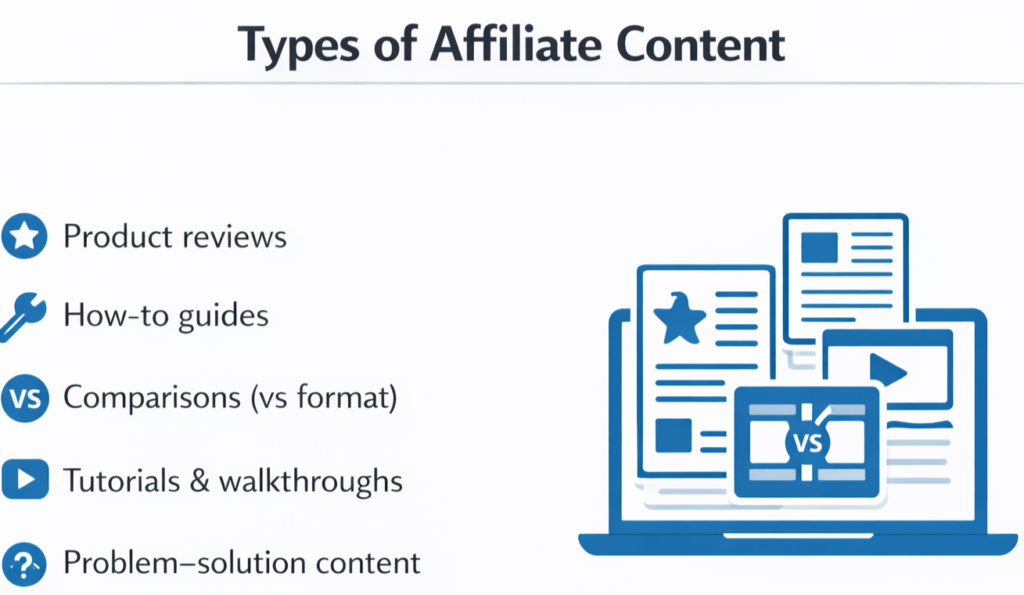
Effective content formats include:
- How-to guides: teach someone to accomplish something while showing relevant tools
- Product comparisons: help people decide between specific options
- Tutorials and walkthroughs: demonstrate how to use something effectively
- Honest reviews: share real experiences with both strengths and limitations
- Problem-solution posts: address a specific pain point and present solutions
These formats work because they meet people at the moment they are already searching for answers. Someone Googling “how to edit podcast audio” is actively looking for help right now. Affiliate links work best when they feel like a natural next step, not a sales pitch.
The worst affiliate content tries to convince people they have a problem. The best affiliate content helps people who already know they have a problem find the right solution.
What Nobody Tells You About Affiliate Marketing
Most beginner guides skip the uncomfortable truths. Here’s what you’ll encounter that rarely gets mentioned :
Your first commission might take months to arrive. Not because the system is broken, but because trust, traffic, and timing all need to align. You’ll write content that gets zero engagement. You’ll promote products that nobody buys. You’ll question whether you’re doing it wrong.
You’re probably not doing it wrong—you’re just early in the process.
Another truth: most of your income will come from a small percentage of your content. You might publish 50 pieces of content and find that three of them generate 80% of your commissions. This isn’t failure—it’s the normal distribution of results in content marketing. The challenge is you don’t know which three pieces will perform until you’ve created all fifty.
Finally, affiliate marketing requires you to balance two competing priorities: providing genuine value and making money. When these conflict, value must win. Every time you prioritize commission over helpfulness, you damage the trust that makes affiliate marketing work in the first place.
What Beginners Need to Understand Before Starting
Before starting affiliate marketing, beginners must understand that results come from structure, not luck. The people who succeed aren’t necessarily more talented—they understand principles that guide their decisions.
Core principles to know early:
- Targeted traffic converts better than random traffic
- Trust is built through consistent, helpful content
- Quality content outperforms quantity
- Right product matters more than high commission
Affiliate marketing rewards clarity and patience more than speed. You’re building a system where the work you do today generates returns months from now. This delay between effort and reward causes most people to quit before they see results.
Now these all points might sound so hard to you but trust me it will save you from the false and misleading information on internet. This indeed will get passive by time as your content start getting reach and you build traffic but when starting many beginner don’t have any audience so building it will take some time and consistent efforts.
How Long Affiliate Marketing Takes to Show Results
Affiliate marketing follows a compounding model. Early efforts often feel slow because trust, visibility, and authority take time to develop. This timeline frustrates beginners who expect immediate returns.
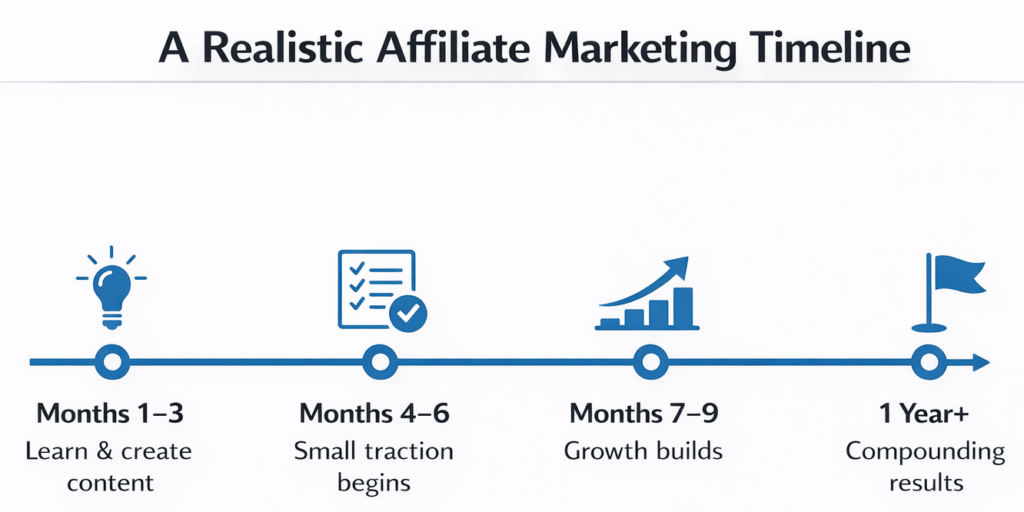
A realistic timeline looks like:
- Months 1-3: Learning, setup, and creating your first content pieces
- Months 4-6: Content creation, refinement based on early feedback, minimal earnings
- Months 7-9: Initial traction as search engines find your content and trust builds
- Months 10-12: Gradual growth through consistency, and income start showing up
- Year 2+: Compounding effects as existing content continues working
This is not a 30-day system. It is a long-term digital asset model where content you create continues generating value long after you publish it. A comprehensive guide you write today might earn commissions for years if it remains relevant and well-maintained.
The advantage of this timeline is that it filters out people looking for quick wins, reducing competition for those willing to play the long game.
Common Mistakes That Kill Affiliate Marketing Success
Certain mistakes appear so consistently among beginners that they’re worth addressing directly. Avoiding these accelerates your progress significantly.
Promoting too many products too soon: New affiliates often join twenty programs and scatter their efforts. Focus on 2-3 products you genuinely understand and can recommend confidently. Depth beats breadth in the beginning.
Choosing products based on commission rates alone: A 50% commission on a product your audience doesn’t need is worth exactly zero. A 5% commission on something they’re already searching for is valuable.
Creating content about what you want to talk about instead of what people need: Your passion for a topic matters, but it must overlap with actual search demand and genuine problems people are trying to solve. if you like cooking talk about it, if you like sports start making content around it. Picking something you don’t like will leads to burnout.
Giving up before the compounding kicks in: Most beginners quit around month 4-6, right before their early content starts gaining traction. The growth curve in affiliate marketing is not linear.
Recognizing these patterns in advance helps you navigate around them.
How to Choose Your First Affiliate Program
Your first affiliate program should meet specific criteria that set you up for early wins rather than early frustration.
Look for programs that offer:
- Products you actually use or understand deeply: Authenticity is impossible to fake
- Clear tracking and reliable payments: Check reviews of the affiliate program itself
- Reasonable commission rates for the product type: Compare within the same category
- Adequate cookie duration: 30-90 days gives people time to make decisions
- Quality support and resources: Good programs help affiliates succeed
Popular starting points include:
- Amazon Associates: Low commissions (1-10%) but huge product selection and trust
- ShareASale: Mid-tier for physical and digital products across many niches
- Commission Junction: Enterprise brands with established reputations
- Individual brand programs: Often better rates but requires more vetting
Start with one program in a niche you understand. Master the basics of content creation, link placement, and tracking before expanding to multiple programs.
Affiliate Marketing as a Skill, Not a Shortcut
Affiliate marketing is best understood as a skill set rather than a trick. It combines multiple disciplines that transfer across platforms and niches.
Core skills you develop:
- Content creation: writing, video production, or design
- Audience understanding: learning what people actually need vs what they say they want
- Basic marketing psychology: how and why people make purchase decisions
- Consistent execution: showing up repeatedly even when results are invisible
- Data interpretation: understanding which efforts produce results
Once learned properly, this skill set becomes valuable beyond affiliate marketing. You understand how to create content that converts, how to build trust at scale, and how to align recommendations with genuine needs. That’s what makes it sustainable.
These skills compound over time. Your tenth piece of content will be dramatically better than your first. Your ability to identify what products will resonate improves with experience. The learning curve is real, but so is the progress.
Who Affiliate Marketing Is Best Suited For
Affiliate marketing works best for people who are willing to build before earning. It rewards specific mindsets and circumstances more than others.
It is suitable for:
- Beginners learning online business: Low barrier to entry, real business skills
- Students developing digital skills: Practical application of marketing principles
- Creators building long-term content: Monetizes expertise you’re already sharing
- Career professionals: Share industry knowledge and tools you already use
- Anyone seeking a realistic online income model: Works but requires actual work
It is not suitable for those seeking instant results or zero-effort outcomes. If you need income within 30 days, affiliate marketing is the wrong choice. If you’re building something that generates income for years, it’s worth serious consideration.
The ideal affiliate marketer is patient, consistent, genuinely helpful, and comfortable with delayed gratification. They’d rather build something sustainable than chase quick wins.
Final Point
Affiliate marketing is simple in structure but serious in execution. When approached with clarity, patience, and intent, it becomes a reliable long-term system rather than a source of confusion.
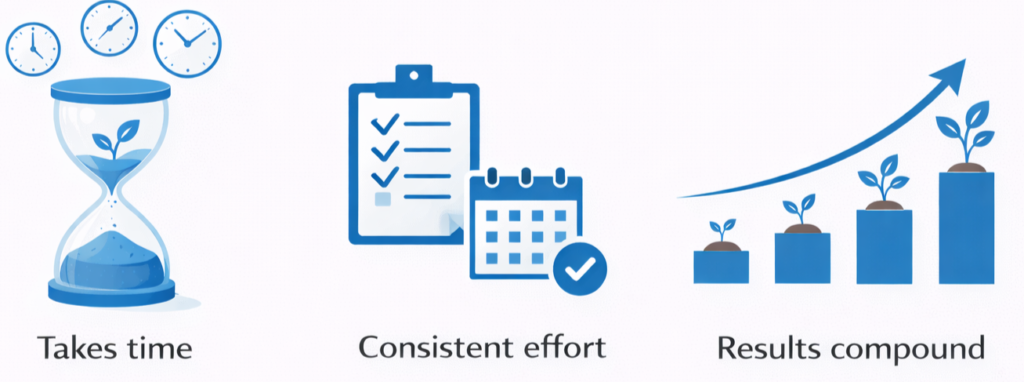
Understanding how it works—before chasing results—is what separates sustainable growth from disappointment. The mechanics are straightforward. The execution requires discipline. The results compound over time.
That understanding is where every beginner should start. Not with links and commissions, but with the fundamental question: Can I create content that genuinely helps people solve problems? Everything else follows from that answer.