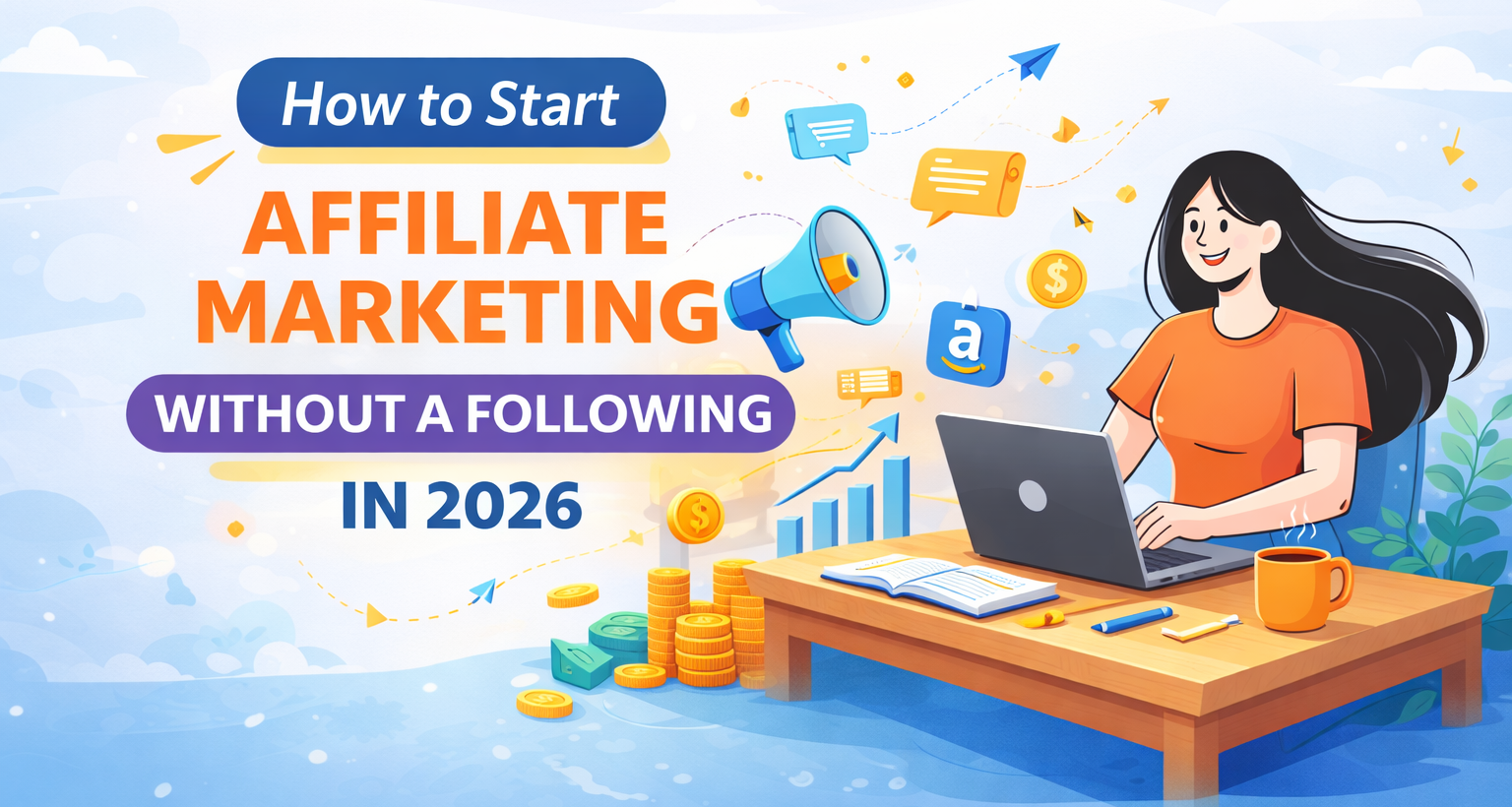
You’ve probably heard this before: “You need thousands of followers before you can make money online.” Sounds right, doesn’t it? But here’s the truth—you don’t need a huge following to start making money with affiliate marketing. You can do affiliate marketing without a following, You just need the right people finding your stuff when they’re ready to buy.
Think about it. Someone typing “best budget laptop for students” into Google is already looking to spend money. They’re way more valuable than 10,000 Instagram followers who are just scrolling through cat videos.
In this post, I’ll show you exactly how to start affiliate marketing without followers, why having a small audience actually works, and what really makes people click your links and buy. No “make $10k in a week” promises—just real talk about starting from zero.
I wish someone had told me this when I started: you don’t need to wait until you’re “big enough.” You can literally start today and Affiliate Marketing has changed since time so you need to stay ahead.
What “Big Audience” Really Means (And Why Everyone Gets This Wrong)
When people say you need a big audience, they usually mean stuff like:
- 10,000+ Instagram followers
- Thousands of email subscribers
- Huge YouTube channel
- Tons of website traffic every month
The idea is simple: more people = more clicks = more money, right?
Wrong. Here’s the problem—having lots of followers doesn’t mean they’ll buy anything. You could have 50,000 TikTok followers who love your videos but never click a single link. Or you could have a tiny blog getting just 200 visitors per month who are actually searching for products to buy.
See the difference? It’s all about buying intent—are people just browsing, or are they ready to pull out their credit card?
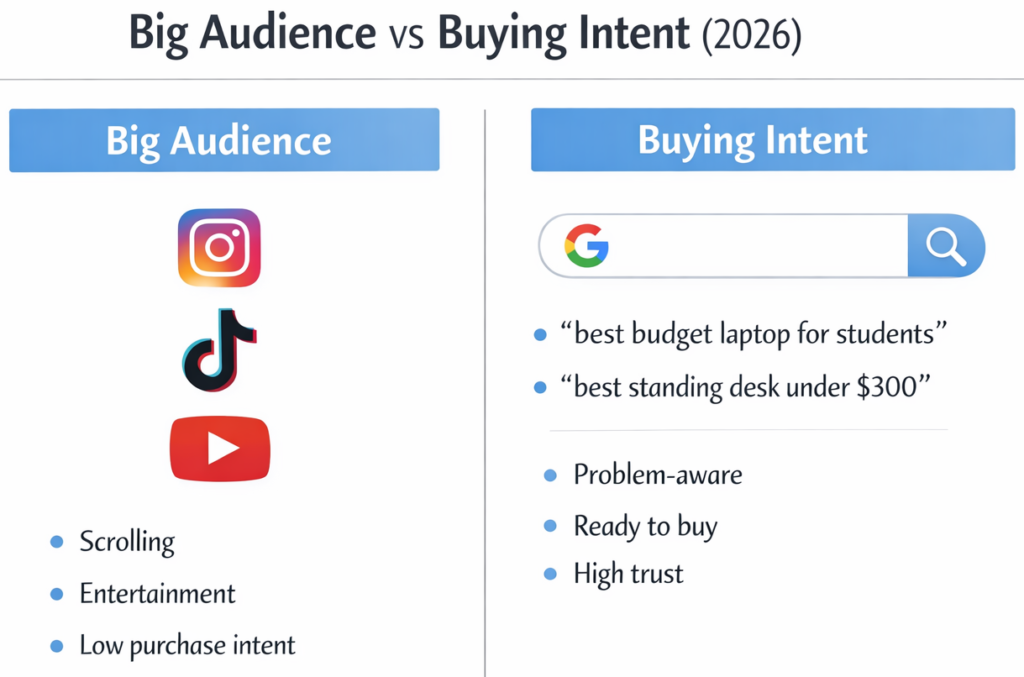
When someone finds you through Google search (like “best running shoes for flat feet”), they’re already shopping. When someone follows you on social media, they’re usually just killing time.
In 2026, Google and other platforms care way more about how helpful you are than how popular you are. A small blog post that perfectly answers someone’s question will beat a viral post from a huge influencer every single time you don’t need big following to start.
How Affiliate Marketing Works (Explained Like You’re 5)
Okay, let me break this down super simple:
Step 1: Pick one specific problem to help with. Don’t try to talk about “everything fitness.” Pick something narrow like “home workout gear for beginners” or “budget meal prep containers.”
Step 2: Join an affiliate program. Places like Amazon Associates, ClickBank, or ShareASale let you promote products and earn commissions. It’s free to join.
Step 3: Get your special tracking link. This is just a unique URL that tells the company you sent that customer. It tracks your sales.
Step 4: Make helpful content. Write a blog post, film a YouTube video, make a comparison guide—whatever helps people make a decision.
Step 5: Get paid when someone buys. If someone clicks your link and buys something, you get a cut. Usually 3% to 50% depending on what you’re selling.
That’s literally it. You’re just helping people find good products and getting paid for it. No magic, no secret tricks.
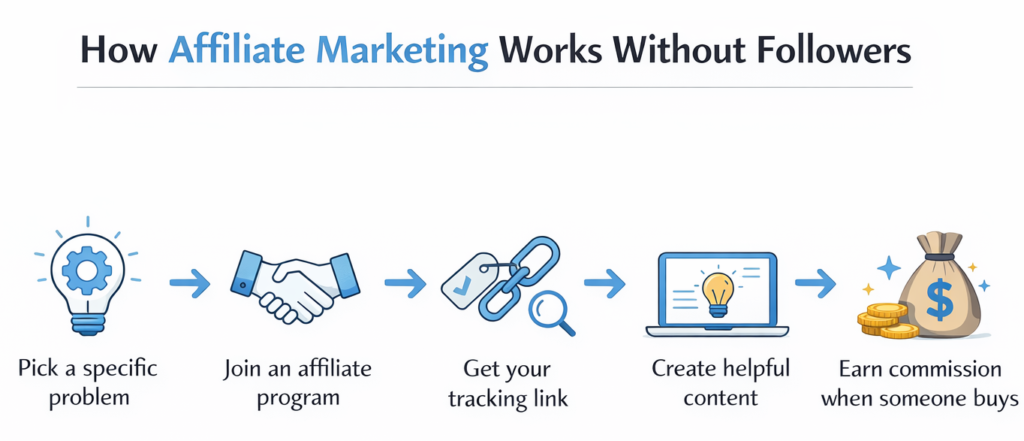
The whole game is showing up when someone’s already looking to buy something.
Note: Many affiliate programs like Impact reject beginners not because they don’t have content or traffic but they don’t see any proof that you are a legit person or a bot, If you get rejected by any reason just email them telling you are just starting out and want to join there program, or to avoid this, you can first make you platform and upload some content on it, then apply , this will help you get accepted easily.
Why Small Traffic Actually Works Better (No Joke)
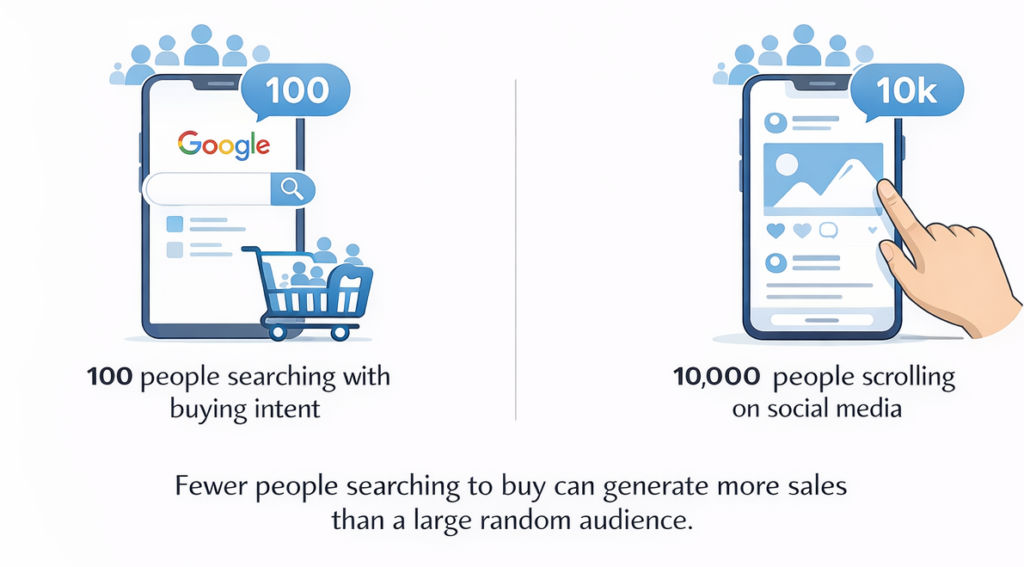
Here’s what nobody tells beginners: small, focused traffic makes way more money than huge random traffic.
Think about it this way. If 100 people search “best standing desk under $300,” they’re literally shopping RIGHT NOW. Half of them will probably buy something in the next 24 hours.
Compare that to posting on Instagram where 10,000 people see your story but 99% are just double-tapping and moving on.
This is why tiny niche blogs can make $500/month from affiliate marketing while Instagram accounts with 50k followers make nothing. People trust detailed answers more than they trust random product posts.
When you write one really helpful article about “best coffee makers for dorm rooms,” you’re not competing with Mr. Beast. You’re competing with other small blogs. And if yours is actually helpful, you can rank on Google even with zero followers.
The game changed. You don’t need to be famous. You need to be helpful at the exact moment someone needs help.
Diversify Your Traffic [The 2026 Reality]
Here’s something important that’s changed recently: relying only on Google traffic isn’t enough anymore. Google’s algorithm updates have made it tougher for new blogs to rank, especially in affiliate-heavy niches.
I’m not saying Google is dead. It still works. But if you’re starting from zero today, you need multiple traffic sources to actually see results in a reasonable timeframe.
Think of it like this—would you rather fish in one pond or five ponds? More places to catch fish = more chances to make sales.
The new beginner strategy is simple: create content on multiple platforms where your audience actually hangs out. Not because you need millions of followers, but because each platform gives you a different way to reach people who are ready to buy.
Let me break down the platforms that actually work for affiliate marketing without a big following:
Pinterest: The Hidden Goldmine for Affiliate Content
Pinterest isn’t social media—it’s a visual search engine. People use it to find ideas and solutions, which makes it perfect for affiliate marketing.
Here’s what makes Pinterest powerful:
- Your pins keep getting views for months (even years) after you post them
- People on Pinterest are actively looking for products and recommendations
- You don’t need followers to get traffic—your pins show up in search results
- One good pin can send you 100+ clicks per month on autopilot
Real example: You write a blog post about “budget desk setup for remote work.” You create 3-5 pins for that post with different designs. People searching “home office ideas” or “cheap desk setup” find your pins, click through to your blog, and buy through your affiliate links.
The beauty? You could have zero Pinterest followers and still get traffic. It’s all about optimizing your pins for search, just like Google.
YouTube: Long-Term Traffic That Keeps Paying
YouTube might sound intimidating, but here’s the truth: you don’t need fancy equipment or even show your face. Screen recordings, product unboxings, comparison videos—these all work for affiliate marketing.
Why YouTube works for beginners:
- Videos rank on both YouTube AND Google (double exposure)
- People trust video reviews more than text
- One good video can bring traffic for years
- You can start with just your phone camera
Simple video ideas that work:
- “Product X vs Product Y – Which Should You Buy?”
- Screen recording walkthroughs of software (with affiliate links)
- Budget haul videos showing multiple products
- “How to choose the right [product]” guides
Put your affiliate links in the video description. When someone’s watching your honest review and you genuinely help them decide, they’ll click your link.
The kicker: A video with 500 views can make you more money than a blog post with 5,000 views if those 500 people are ready to buy.
TikTok & Instagram Reels: Quick Wins for Product-Based Niches
Short-form video is huge right now. And the best part? You don’t need followers to go viral. TikTok and Instagram show your content to people who don’t follow you based on interests.
This works especially well for:
- Product comparisons (“I tested 5 budget blenders—here’s the winner”)
- Before/after transformations (cleaning products, organization tools, etc.)
- “Things I bought that were actually worth it” videos
- Problem-solving content (“Struggling with small closet space? Try this…”)
Important: Most platforms don’t let you put clickable links in regular posts. But you can:
- Put “link in bio” and send people to your blog or Linktree
- Use TikTok Shop or Instagram Shopping features
- Build an audience that trusts you, then direct them to your blog
These platforms are perfect for showing products in action. A 15-second video of you actually using something beats a thousand-word review for some people.
How to Pick the Right Platform Based on What People Are Looking For
Here’s the thing most beginners miss: people use different platforms with different intentions. Someone on Pinterest is searching for home decor. Someone on TikTok is just scrolling for entertainment. Understanding this changes everything about where you should focus your energy. The platform you choose should match how people naturally search for the type of products you’re promoting.
Platform Breakdown by Search Intent:
Google (Blog/Website): People here are actively searching with buying intent. They type “best laptop under $500” and they’re ready to compare and buy. Best for detailed reviews, comparisons, and expensive products that need explanation.
Pinterest: Users are in planning mode—looking for ideas and solutions they’ll act on later. They search “budget meal prep” or “small apartment decor” and save for when they’re ready. Best for anything visual like home decor, DIY, recipes, fashion, and lifestyle products.
YouTube: People want to see products in action before buying. They watch reviews and tutorials to build trust and see if something actually works. Best for tech, software, beauty products, fitness gear, and anything that’s easier to understand when you watch it being used.
TikTok/Instagram Reels: Users are scrolling for fun, not actively shopping. They’ll impulse buy if something catches their eye or solves an obvious problem. Best for trendy items under $50, before/after results, and products that create “I need that!” moments.
Important point: You need to pick platform based on you niche and your buyer intent, YOU DON’T NEED TO PICK ALL PLATFORM AT ONCE, start with only two platforms that’s it . That combo alone can get you your first sales way faster than waiting for Google to notice you.
Real Example: How You Make Your First Sale with Almost No Traffic
Let me show you how this actually works in real life.
You start a blog about budget living. You write one good post called “5 Best Mini Fridges for Small Apartments Under $150.”
You write honest reviews, compare features, include your Amazon affiliate links, and publish it. Google finds your post and starts showing it to people searching for mini fridges.
First month? You get 60 visitors total. Sounds pathetic, right?
But wait—out of those 60 people, 30 were actively shopping for mini fridges. That’s why they found you. Ten people click your links to check prices. Three people actually buy.
Average mini fridge costs $100. You get 3% commission from Amazon. That’s $9 from 60 visitors.
Now imagine you write 15 posts like this. Different products, same strategy. Suddenly you’re making $135/month from content you wrote once.
Is it life-changing money? Nope. But you just made real money from almost no traffic. That’s the power of matching the right content with the right search.
What Actually Matters (Forget About Follower Counts)
If you’re starting affiliate marketing today, focus on these things instead of chasing followers:
Search intent: Are people actually looking for what you’re writing about? Use Google to check if people search for it.
Helpful content: Can someone read your post and actually make a decision? Or are you just saying “this product is great” without explaining why?
Product fit: Does the thing you’re promoting actually solve the problem? Don’t promote random expensive stuff just because the commission is high.
Being honest: Tell people you’ll earn a commission. Don’t hide it. And only recommend stuff you’d actually use yourself or you find that product helpful for others.
Staying consistent: Keep publishing or posting content even when you’re not making money yet.
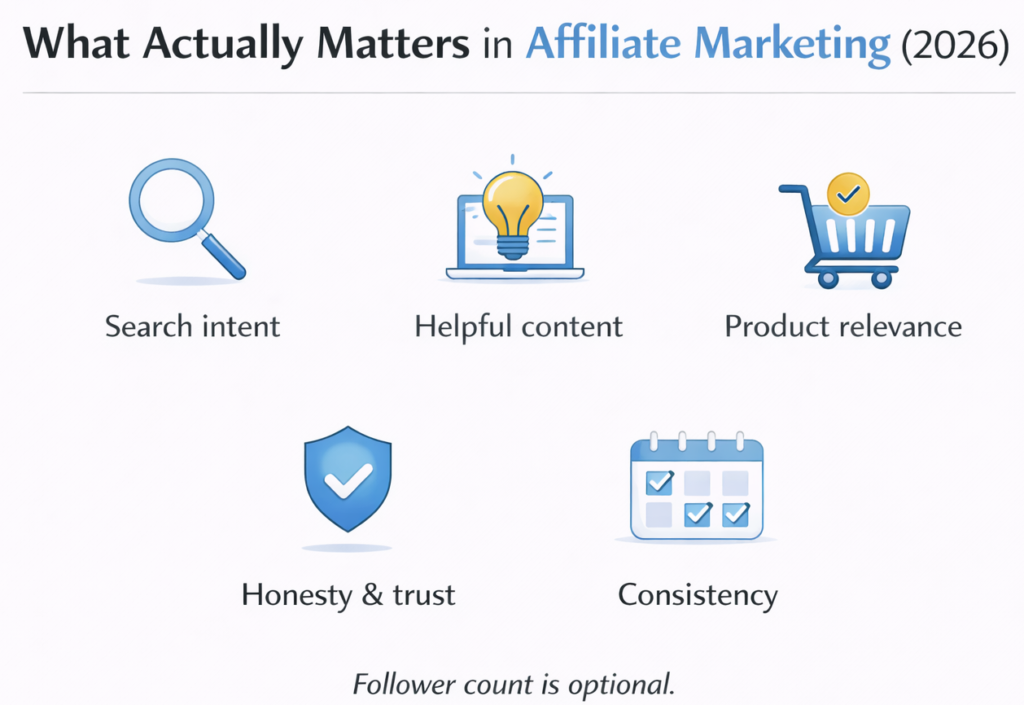
These five things will make or break your affiliate income. I’ve watched people with millions of followers fail because they ignored these basics. And I’ve seen people with tiny blogs succeed because they got this stuff right.
Mistakes Beginners Make (Don’t Do These)
Let me save you some headaches:
Stuffing too many links everywhere. You don’t need 20 affiliate products in one article. Pick 3-5 solid options and explain them properly. People get overwhelmed and leave when you throw everything at them.
Chasing trending topics. Yeah, that viral thing is popular today. It’ll be dead next week. Focus on problems that don’t go away [evergreen products]—like “best budget laptops” or “beginner workout equipment.”
Copying what influencers do. Their tactics work because people already know and trust them. You’re starting from zero. You need a different game plan based on search traffic, not followers.
Expecting money fast. This isn’t a “get rich quick” thing. Your first commission might take 2-3 months to show up. That’s completely normal. Don’t quit after two weeks.
Writing or making garbage content. You can’t just throw up 300 words and expect Google to rank you or you just can’t copy another video and post it. Make something actually useful. Google and other platforms are smart now—it knows when you’re just trying to make a quick buck.
Bottom line: shortcuts don’t work anymore. Patient, helpful content wins every time.
Your Questions Answered
Can I really start with zero followers?
Yes. Seriously. Your first “audience” is Google search, not social media. Write helpful content about products people are searching for. Optimize it for search engines. Followers come later (if you even want them).
Is this still worth doing in 2026?
100%. But it’s more competitive than it used to be. The lazy tactics from 10 years ago (like copying product descriptions) don’t work. You actually have to create helpful, original content now. If you’re willing to do that, you can absolutely make money.
How long until I make my first sale?
Usually 2-4 months if you’re publishing good content regularly. Some people get lucky in week one. Some take 6 months. It depends on your niche, how competitive it is, and how good your content actually is. Just keep going.
Here’s Where You Start
Look, here’s the real deal: you don’t need thousands of followers to make affiliate marketing work. You need the right people finding you when they’re ready to buy.
And that happens when you write helpful stuff that answers real questions. It happens when you stop worrying about follower counts and start thinking about what people are actually searching for. It happens when you stick with it long enough for small wins to add up.
Stop waiting to be “big enough” to start. Pick one topic, write something, make content genuinely useful, and let platform send you people who are already looking to buy.
Start small. Keep it simple. Focus on being helpful.
That’s the whole game.