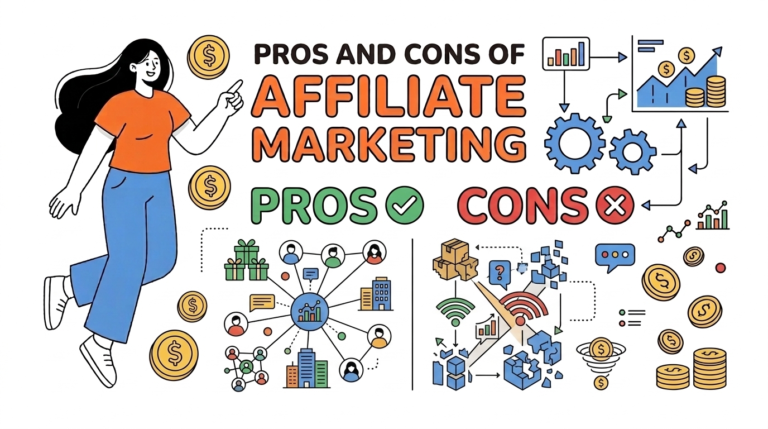
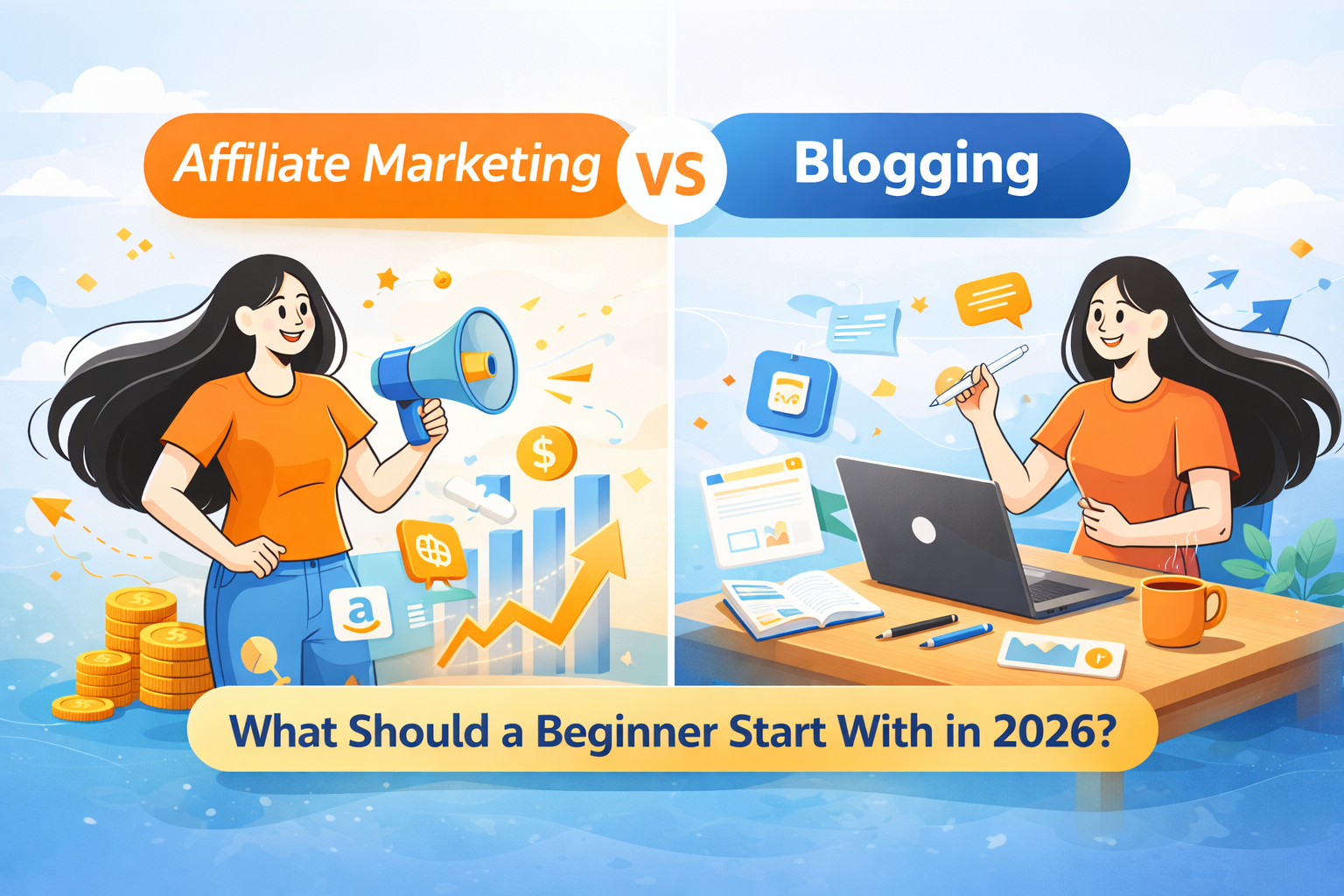
You’ve probably heard both sides. Some people swear by blogging. Others say affiliate marketing is where the real money is. And honestly? Both can work, but the landscape has completely changed in 2026. Affiliate Marketing vs Blogging is different game now.
Here’s the thing. A few years ago, I would’ve told you to start a blog first, then add affiliate links. That was the playbook. But AI has flipped everything upside down. People don’t read blogs the way they used to. They ask ChatGPT. They scroll Instagram. They watch YouTube.
So which one should you actually start with? I’m going to break this down based on where we are right now in 2026. Not some outdated advice. What actually works today for someone starting from zero.
What Affiliate Marketing Actually Is in 2026
Affiliate marketing is when you promote someone else’s product and earn a commission when people buy through your link. You don’t create the product. You don’t handle shipping. You just connect people with products they already want.
But here’s what’s changed. You used to need a blog to do affiliate marketing. That still works, but it’s way harder now. Why? Because AI answers questions before people even click on your blog.
Think about it. Someone searches “best running shoes for beginners.” They see an AI-generated answer right at the top. They don’t need to read your 2,000-word blog post anymore.
So what works now? Modern affiliate marketing happens on platforms where people actually hang out: YouTube, Instagram, Pinterest, TikTok.
Here’s what that looks like:
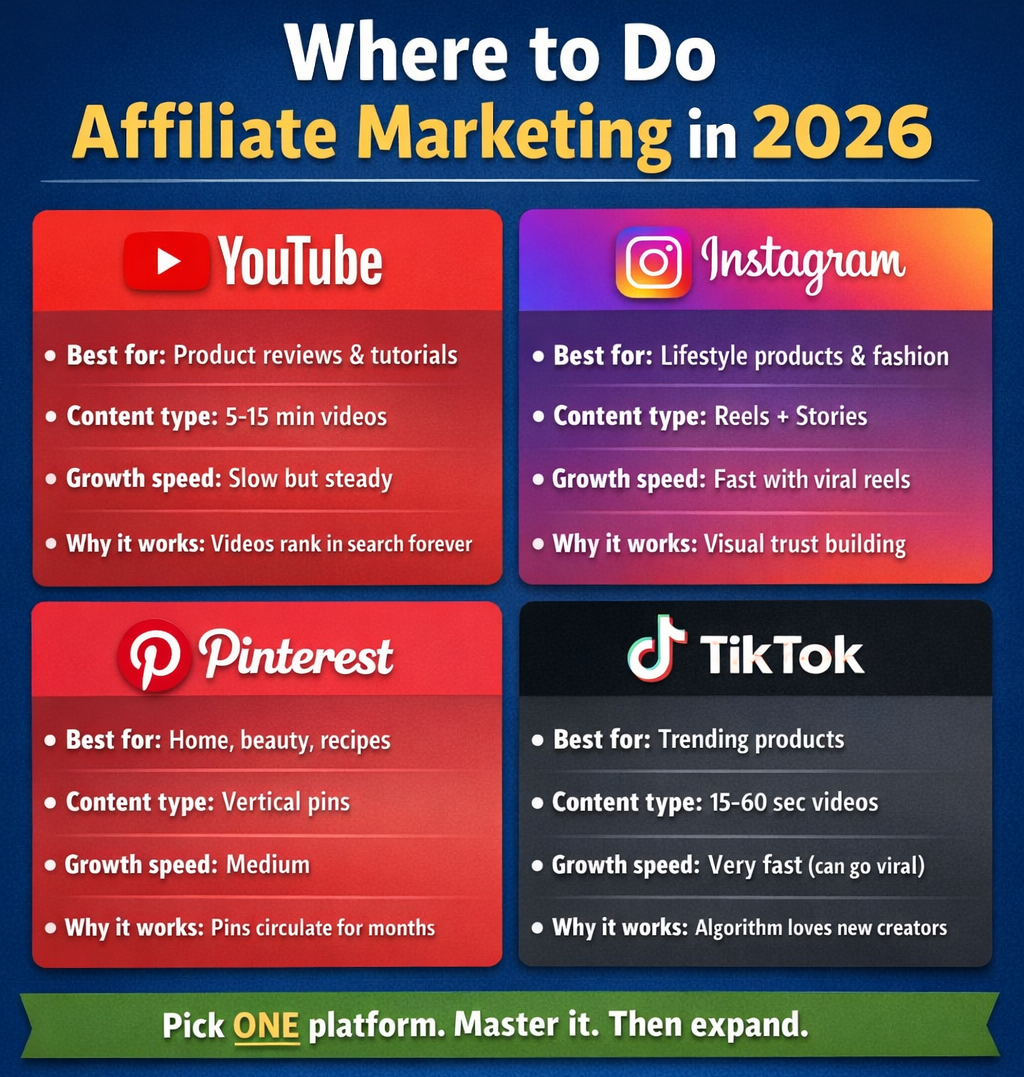
- YouTube: Review videos, comparison content, tutorials showing products in action
- Instagram: Reels showing products you use, stories with honest reviews
- Pinterest: Visual pins linking to your product recommendations
- TikTok: Short-form content showing real results
You’re not waiting for Google to rank you. You’re creating content that gets seen immediately.
What Blogging Actually Means Right Now
Blogging in 2026 is not what it was in 2016. Let me be straight with you.
Traditional blogging where you write SEO articles and wait for Google traffic? That’s getting crushed. Google is showing AI answers. People are asking ChatGPT instead of clicking blog posts.
But does that mean blogging is dead? Not exactly. It means blogging as a standalone strategy is risky for beginners.
Here’s what blogging still does well:
- Building long-term authority in a specific niche
- Creating a home base for your personal brand
- Ranking for very specific searches AI can’t fully answer
The reality: You can still make money blogging, but it’s harder and slower. You’re fighting AI overviews, you’re competing with established sites, and you’re waiting months to even see meaningful traffic.
I’m not saying don’t blog. I’m saying don’t start there if you want to make money in the next 4-6 months.
The Money Question: How Much Does Each Cost?
Let’s talk real numbers.
Affiliate Marketing:
You can literally start for free. I mean completely free.
- Create a YouTube channel: $0
- Make videos with your phone: $0
- Put affiliate links in your description: $0
- Start posting on Instagram or Pinterest: $0
If you want to level up: Basic ring light ($20-30), free editing apps like CapCut.
Total to start seriously: $0-50
Blogging:
You need more stuff right away:
- Domain name: $10-15 per year
- Web hosting: $3-10 per month ($36-120 per year)
- WordPress theme: $0-60
Total first year: $50-100
The difference isn’t just money. It’s risk. With affiliate marketing on free platforms, you can test without spending anything. With blogging, you’re paying monthly hosting whether you make money or not.
Timeline to Your First Dollar
Affiliate Marketing:
If you’re consistent, you can see your first commission in 4-5 months. Maybe sooner.
- Month 1-2: Learning, posting consistently, figuring out what works
- Month 3-4: Building a small following, making first few sales
- Month 5-6: Earning $50-300/month if you’re doing it right
Blogging:
This is where it gets rough.
- Month 1-3: Writing content, learning SEO, getting zero traffic
- Month 4-6: Maybe 10-50 visitors per day if you’re lucky
- Month 7-12: Starting to see traffic, making $0-50
The brutal truth: Blogging is a long game. Most new blogs don’t make a dollar in their first year. Google takes 6-12 months just to start trusting a new domain.
The Technical Stuff: What You Need to Know
Affiliate Marketing:
Pretty minimal. Seriously.
- Know how to use a camera (even your phone)
- Learn basic video or photo editing (YouTube tutorials teach this free)
- Understand how affiliate links work (takes 10 minutes)
You don’t need coding, website design, or server management. The learning curve is mostly about content creation. Can you talk on camera? Can you take decent photos? That’s it.
Blogging:
You need to learn:
- How to buy a domain and set up hosting
- How to install WordPress
- Basic SEO (keyword research, on-page optimization)
- How to write for both readers and Google
- Site speed and mobile optimization
Yes, AI tools make this easier now. But there’s still a real learning curve at the start. I’ve seen beginners spend 2-3 weeks just setting up their blog.
Do You Need Both?
Here’s what people used to say: “Start a blog, then do affiliate marketing on your blog.”
In 2026? That’s outdated advice.
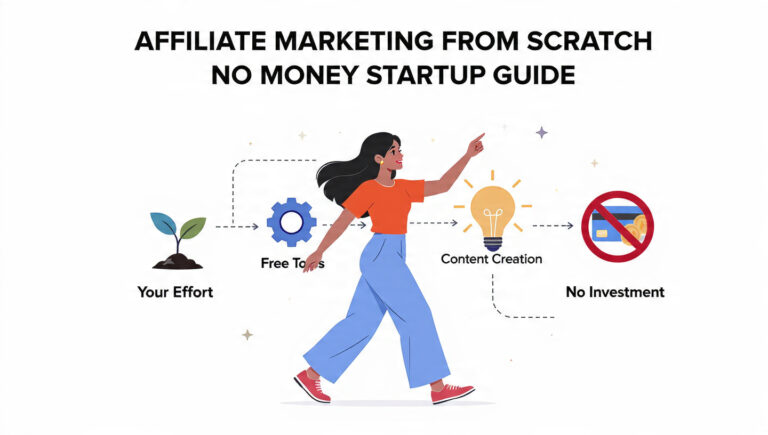
You don’t need a full blog to do affiliate marketing anymore. Here’s what you actually need:
- A simple link page (Linktree, Beacons, Stan Store)
- Social media accounts where you post content
- A way to connect with your audience
Your Instagram or YouTube channel IS your platform. When you see a YouTuber recommend a product, do you go read their blog? No. You click the link in their description.
The content lives where people already are. Your links just need a simple page to live on.
Time Commitment: What Your Week Looks Like
Affiliate Marketing:
- 3-5 hours creating content (filming, editing, designing posts)
- 1-2 hours engaging (comments, DMs)
- 1 hour researching products
Total: 5-8 hours per week
The beauty: You can batch content. Film 4 videos in one day. Schedule posts for the week.
Blogging:
- 4-6 hours writing one post (research, writing, editing, SEO)
- 2-3 hours on SEO work (keyword research, backlinks)
- 1-2 hours promoting
Total: 7-11 hours per week for one post.
And you need to publish consistently. Most successful blogs publish 2-4 posts per month minimum.
Bottom line: Both require consistency, but affiliate marketing gives you faster feedback.
Starting From Zero: Can You Succeed?
Affiliate Marketing With Zero Followers:
You absolutely can. Here’s why:
- TikTok and Pinterest don’t care about follower count. Your content can go viral with 0 followers.
- YouTube rewards good content over time. Videos get discovered months later through search.
- Instagram Reels can blow up. I’ve seen accounts with 200 followers get 50,000 views.
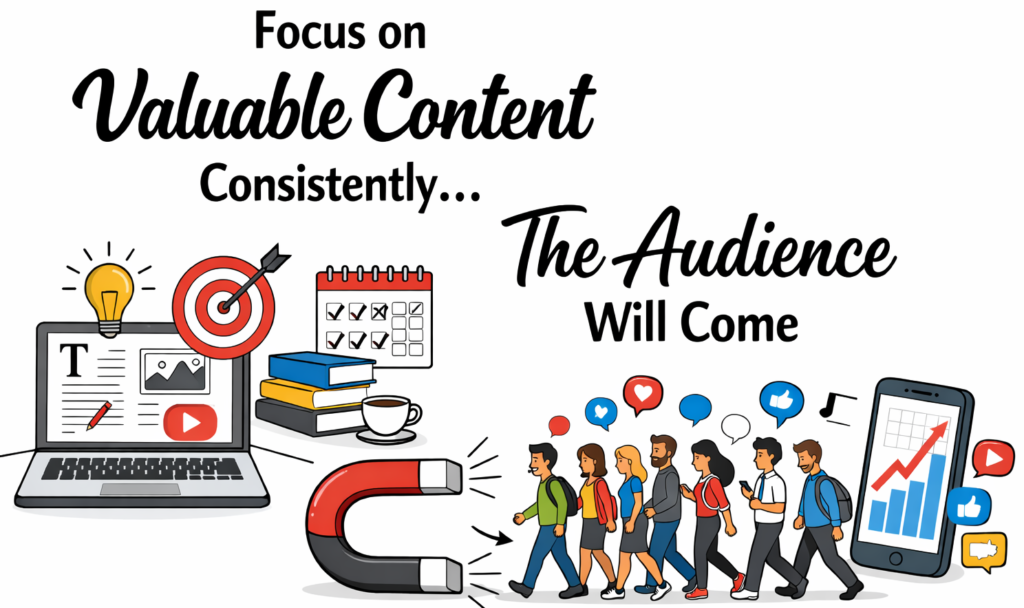
The strategy: Focus on valuable content consistently. The audience will come.
Blogging With Zero Authority:
This is harder. New blogs struggle because:
- Google doesn’t trust new domains
- You’re competing against 10-year-old sites
- AI overviews take clicks away
Can you succeed? Yes, but you need to be smarter: Pick very specific niches, focus on long-tail keywords, build backlinks from day one.
The difference: With affiliate marketing, good content is enough. With blogging, you need good content AND SEO AND time AND luck.
The Biggest Mistakes (And How to Avoid Them)
Affiliate Marketing Mistakes:
- Quitting too early. Most people quit at month 2-3 right before it starts working.
- Promoting garbage products. Only promote stuff you’d actually use.
- Being inconsistent. Posting once a week, then disappearing kills momentum.
How to avoid them: Commit to 6 months minimum. Post on a schedule. Promote products you genuinely like.
Blogging Mistakes:
- Starting without keyword research. Writing posts nobody searches for is a waste.
- Ignoring SEO. Content alone won’t rank.
- Giving up after 3 months. Blogs need 6-12 months to even start ranking.
How to avoid them: Learn basic SEO before you start. Commit to 12 months minimum. Build backlinks from day one.
Which One Is Future-Proof?
Why Affiliate Marketing on Social Platforms Is Safer:
- People are consuming short-form video more than ever. TikTok, Instagram Reels, YouTube Shorts aren’t going away.
- AI can’t replace video content like it replaces blog posts. ChatGPT can’t create your personality on camera.
- Visual platforms keep growing. Pinterest, Instagram, YouTube aren’t losing users.
- Trust comes from faces and voices now. People buy from people they see, not faceless blogs.
Is blogging dying?
Traditional SEO blogging is on life support. Google’s AI overviews are eating blog traffic.
Blogs that survive in 2026:
- Personal brand blogs (tied to a real person with authority)
- Ultra-specific niche sites (stuff AI can’t fully cover)
- Multimedia sites (blogs with video, podcasts, community)
My prediction: Pure text blogs relying only on Google will keep declining. If I was starting today? I’d go all-in on YouTube or Instagram affiliate marketing.
Your Starting Point: Which Should You Choose?
Start with Affiliate Marketing if:
- You need to make money in the next 4-6 months
- You have less than $100 to invest
- You’re comfortable on camera or creating visual content
- You want faster feedback
- You can post 3-4 times per week
Start with Blogging if:
- You can wait 12+ months to see real income
- You have $100-400 to invest
- You prefer writing over video/images
- You’re willing to learn technical SEO
- You’re building a personal brand for the long term
My honest recommendation for 2026: Start with affiliate marketing on YouTube, Instagram, or Pinterest. It’s faster, cheaper, and more forgiving.
Build an audience. Make your first sales. Then add a simple blog later if you want.
The Real Takeaway
Both affiliate marketing and blogging can make you money. But in 2026, they’re not equal paths.
Blogging is a long-term investment which would require patience and consistency. Affiliate marketing on social platforms is where people actually are, and it gives you a faster path to your first dollar but same goes with this you must have patience and keep posting consistently for visibility and reach.
Start where you can build momentum quickly. The biggest mistake? Starting neither because you’re stuck trying to pick the “perfect” one.
Just start. Pick the one that matches your timeline and skills. Give it 6 months of real effort.
You’ll learn more in 6 months of doing than 6 years of researching.