Introduction
“How long it take to make money with affiliate marketing?” is one of the most searched questions online, yet it’s also one of the most misleadingly answered. Most articles throw out timelines like 30 or 90 days without explaining what actually happens during those months or why beginners struggle to reach those milestones.
Affiliate marketing is not a get-rich-quick model. It’s a skill-based business that depends on learning, consistency, and trust. When those elements are missing, timelines feel confusing and results feel random. This is why many beginners quit early—not because affiliate marketing doesn’t work, but because expectations were never set correctly.
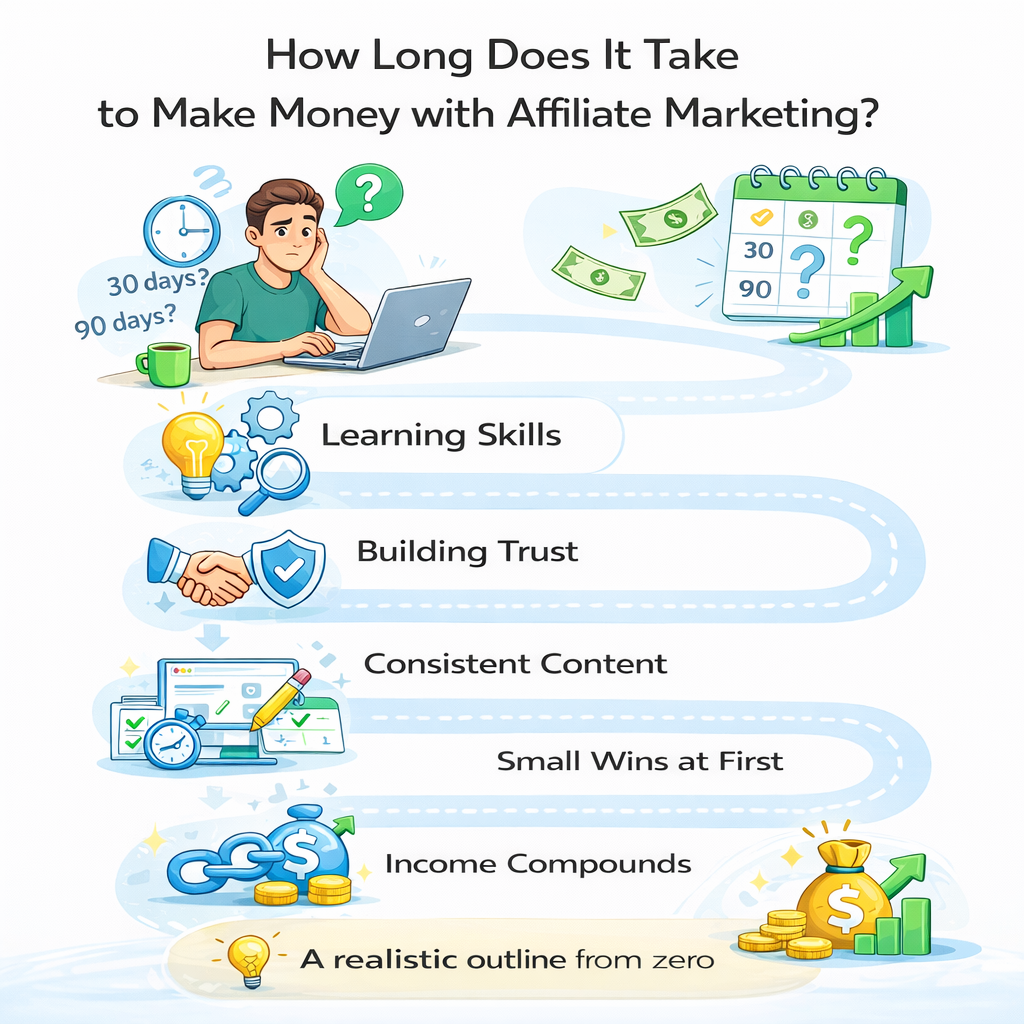
I’m writing this from real experience, not theory. I started affiliate marketing with nothing but a laptop—no website, no YouTube channel, and no traffic. What follows is a realistic breakdown of what “making money” actually means and how long it truly takes when you start from zero.
This article focuses on clarity, not hype.
What Does “Making Money” in Affiliate Marketing Actually Mean?
Before talking about timelines, it’s important to define what “making money” really means in affiliate marketing. Most beginners assume it means consistent income or large monthly earnings, but affiliate marketing for beginner is complete different story.
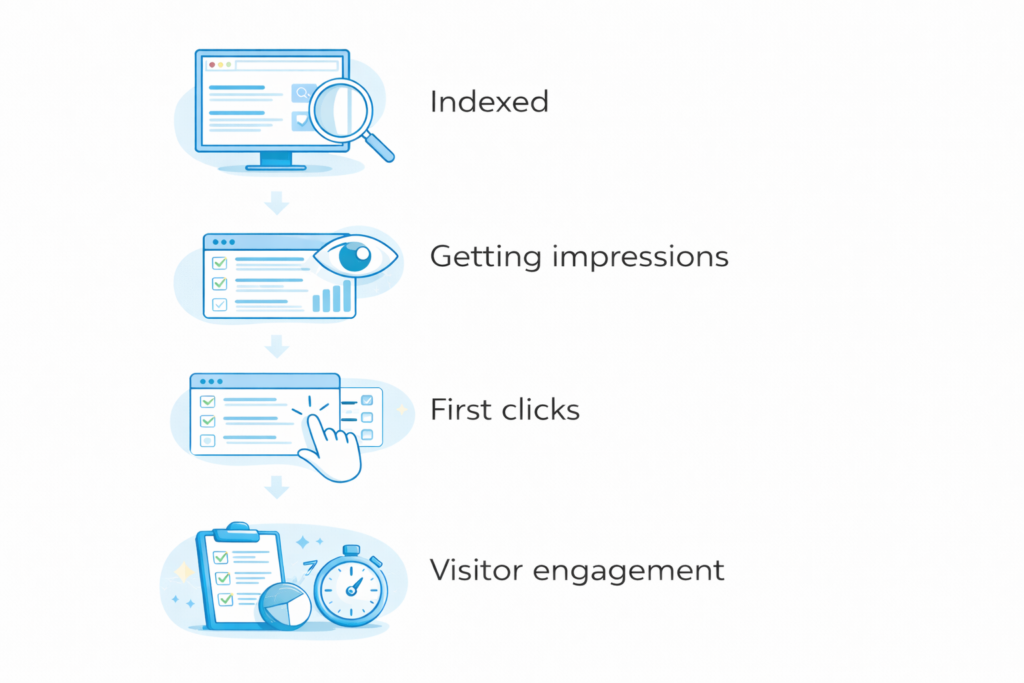
In reality, making money begins long before significant income appears. It starts when your content gets indexed, when people begin clicking and reading, and when affiliate links finally receive attention. These early signals don’t generate much income, but they confirm that the system is working.
When I earned my first commission, it came from a $19 product with around 30% commission. The amount was small, but it proved something critical: a complete stranger trusted my content enough to take action. That first sale mattered more than the money itself.
What “making money” actually looks like in stages:
- Your content appears in search results
- Visitors start clicking and reading
- The first commission is earned
Each stage builds on the previous one. Income is the outcome, not the starting point. My Starting Point: Beginning Affiliate Marketing With Nothing but a Laptop
When I started affiliate marketing, there was no hidden advantage behind the scenes. I didn’t already own a website, I didn’t have a YouTube channel, and there was no existing traffic coming from anywhere. I wasn’t building on top of an audience or past experience. I was starting from absolute zero.
This starting point is important because many success stories online quietly assume some form of leverage—an email list, social media followers, or previous online work. When those factors are removed, the timeline changes completely. Starting from zero means every step takes time: learning, creating, waiting, and improving. But seeing consistent daily income doesn’t happen overnight.
All I had was a laptop and the willingness to learn through trial and error. That meant figuring things out the hard way—understanding how content works, how search engines behave, and what people actually look for online. There was no shortcut, and that reality shaped how long it took to see results.
What I did not have when I started:
- No website or blog
- No YouTube channel
- No social media following
- No traffic of any kind
- No paid tools or ads
What I did have:
- A laptop
- Time to learn
- Willingness to make mistakes and improve
Starting from this position is slower, but it’s also the most honest baseline. If you’re in the same situation, this timeline applies to you far more than the “overnight success” stories you see online.
My First Real Progress Before I Made Any Money
Before I earned my first affiliate commission, there were clear signs that something was working, even though no money had appeared yet. This stage is important because most beginners quit here, assuming nothing is happening, when in reality the foundation is being built.
Affiliate marketing does not start with income. It starts with visibility and engagement. Once people begin finding your content and interacting with it, you’re on the right path—even if your affiliate dashboard still shows zero.
The first real signs of progress I noticed were:
- My blog posts started getting indexed by search engines, meaning Google was recognizing and showing my content
- I began seeing impressions, which confirmed that my content was appearing in search results
- The first clicks arrived, proving that real users were interested enough to open and read my content
- People spent time on the page instead of bouncing immediately, showing that the content was relevant
- These signals appeared before any affiliate approval or commission, but they were essential for long-term success
Why this stage matters more than early income:
- It proves that your content matches search intent
- It shows that your effort is not invisible, just early
- It creates a base for affiliate program approval later
- It prepares your site to convert once links are added
Skipping or ignoring this stage is one of the biggest reasons beginners think affiliate marketing doesn’t work.
How Long It Take to Make Money with Affiliate Marketing [for me]:
After the initial signs of progress, the next big question was obvious: when does the first commission actually happen? This is the stage most beginners obsess over, because money is the only visible confirmation that affiliate marketing works.
In my case, the first commission did not come instantly after publishing content. It came after consistent writing, waiting, and improvement. There was no sudden spike or viral moment—just steady effort over time. When the first sale finally happened, the amount was small, but the meaning behind it was huge.
The exact details of my first affiliate commission:
- The product I promoted was priced at $19, which is common for beginner-friendly digital products
- The commission rate was around 30%, meaning I earned only a portion of the product price
- The income itself was not life-changing, but it proved that a complete stranger trusted my recommendation
- This commission came after three months, starting from absolute zero
The real timeline that led to that first sale:
- I spent the first few weeks creating content without expecting any income
- Search engines slowly started indexing my posts and sending small traffic
- I applied to affiliate programs after having content published
- Once approved, I added affiliate links naturally inside helpful content
- A reader clicked the link and made a purchase, resulting in my first commission
This stage is where many people quit too early. The first sale takes the longest, but once it happens, affiliate marketing stops feeling like a gamble and starts feeling like a system you can build on.
What Wasted the Most Time in the Beginning
In the early days, I spent a lot of time confused and overthinking, which delayed meaningful results. It wasn’t technical limitations that held me back—it was my own approach. Beginners often get stuck searching for topics, tools, or SEO tricks instead of creating helpful content.
One key lesson was realizing that generic content doesn’t work. AI-generated or copy-paste content might look complete, but it doesn’t solve a real problem, and Google will quickly ignore it. Focusing on trust and value from the start saves months of wasted effort.
The main time-wasters I encountered:
- Overthinking which topics to target instead of starting with any content that answers real questions
- Confusion about tools and platforms — I spent time choosing plugins and SEO tools instead of producing content
- SEO misconceptions — trying to game search engines rather than focusing on helpful, original writing
- Not applying to affiliate programs early — I delayed for months, thinking I needed traffic first
- Relying on generic AI content — it produced no meaningful engagement or clicks
Traffic Reality: Why Growth Is Not Linear
Many beginners expect steady traffic growth, but in reality, it fluctuates dramatically. My own blog traffic went up and down for months, which is normal for a new site. Understanding this early prevents unnecessary panic.
Consistency is the key. Traffic isn’t immediate, but each piece of content contributes to the overall ecosystem. Once the foundation is set, search engines start favoring your content, leading to more predictable results.
Key points about early traffic patterns:
- Traffic starts small and inconsistent — don’t panic when numbers fluctuate
- Early traffic comes mostly from search engines, not social media
- Patience is required; visible consistency often appears after 3 months
- Focus on quality content, not short-term metrics
Affiliate Program Approval: What Beginners Should Know
A common beginner mistake is applying to affiliate programs too early. Many platforms, like Impact, require proof of effort or some content before approval. If you apply too soon, you risk getting rejected, which can be discouraging.
I waited until I had published a few blog posts before applying. This approach made acceptance easier and gave me ready-to-promote content once approved.
How to handle program approval:
- Some programs accept beginners without traffic, so research carefully
- Build content first — even a few well-written posts are enough for approval
- Avoid submitting empty applications; it wastes both your time and the program’s
- Once approved, integrate links naturally into helpful content, not forcefully
The Turning Point: Trust-Based Writing Over Selling
My biggest breakthrough was understanding search intent and writing for trust rather than blind promotion. I analyzed what readers were searching for and tailored content to answer their questions genuinely.
This approach increased engagement and ultimately conversions. People respond better to honest recommendations than to aggressive sales tactics.
Key lessons in trust-based content:
- Focus on answering questions, not pushing products
- Use real examples and personal experience to establish authority
- Avoid generic AI or copied content; it won’t build trust
- Make content versatile — blogs, guides, or tutorials all work
Time vs Effort: Why Focused Action Matters More Than Waiting
Affiliate marketing is not a passive business. You don’t just write one blog post and wait for money. What matters is iterative effort: learning, testing, and improving.
After Google started favoring experience, authority, and trust, it became clear that focused effort yields better results than simply waiting for SEO to “kick in.”
How to make time count:
- Continuously improve content based on traffic and engagement
- Fix mistakes instead of repeating them
- Experiment with content type, titles, and formats
- Focus on platforms that deliver consistent engagement (blog, email list)
Realistic Income Expectations for Beginners
One of the hardest lessons is understanding that income starts small. For a beginner, initial commissions may be $10, $20, or $30. This is normal. What matters is the compounding effect over time as content grows and trust builds.
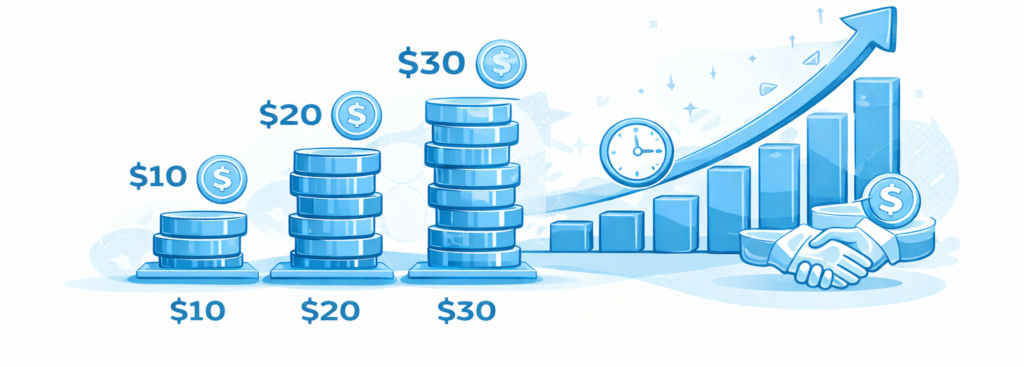
How income grows over time:
- Initial sales are small, but momentum builds with each published post
- Consistent effort turns sporadic sales into predictable revenue
- Scaling comes after learning your audience and optimizing content
- First dollar is hardest; after that, affiliate marketing becomes a repeatable system
Unrealistic Expectations That Hurt Beginners
Beginners are often misled by gurus promising instant income. Claims like “$10,000 in your first 10 days” create false hope and frustration. Affiliate marketing takes months, not days, and requires learning, patience, and consistency.
Common unrealistic beliefs to avoid:
- Expecting immediate commissions from day one
- Believing traffic will appear automatically
- Thinking AI-generated content will replace research and trust-building
- Following hype instead of process
If I Started Again: My First 90 Days Strategy
If I were starting from zero today, I would focus entirely on building foundational content and understanding my audience. The first 90 days would include:
- Choosing a niche and analyzing search intent
- Researching the most common problems and questions in that niche
- Writing high-quality, trust-based content addressing those problems
- Publishing consistently — aiming for multiple posts per week
- Applying to affiliate programs only after having content ready
- Tracking traffic, learning, and iterating constantly
This approach emphasizes value first, income second, which is the key to long-term success.
Final Thoughts: The Honest Timeline for Making Money
Affiliate marketing is not about instant results or overnight success. If you’re starting from zero, the truth is that your first commission will take time—usually around three months of consistent effort. But this isn’t a reason to get discouraged. In fact, it’s the most exciting part of the journey. That period is where you build the foundation that will support your future growth and income.
Many beginners quit before they see results because they compare themselves to unrealistic promises online. Don’t fall into that trap. The reality is that consistency, patience, and focus compound over time. Every blog post, every piece of content, and every small improvement contributes to your long-term success. The first click, the first impression, and the first commission are not just milestones—they are proof that your effort is paying off.
Affiliate marketing rewards those who commit to learning, improving, and delivering value. The early months may feel slow, but every step forward builds trust with your audience and strengthens your skills. Remember, the first dollar is always the hardest, but it is also the most empowering. Once that first sale happens, momentum starts to build naturally, and your growth becomes self-reinforcing.
Here’s why you should stay motivated:
Every effort matters – even small actions today contribute to bigger results tomorrow
You’re learning a real skill – writing, SEO, audience understanding, and marketing all grow together
Consistency compounds – small income now can grow into a full-time business later
Trust pays off – genuine, helpful content builds authority that lasts far longer than hype
You control the timeline – the more effort and focus you put in, the faster you will see results
Affiliate marketing is not a sprint; it’s a long-term journey. Your growth, your income, and your expertise all scale together over time. If you focus on delivering value, staying consistent, and learning from each step, affiliate marketing will start making sense and become financially rewarding.
So, keep going. Keep creating. Keep learning. Every post you write and every effort you put in today brings you one step closer to your first commission, your first meaningful income, and ultimately, the freedom and confidence that come from building a business that works for you.
Remember: Success in affiliate marketing doesn’t happen when you check your dashboard—it happens when you stay consistent, trust the process, and focus on growth every single day. Your first commission is just the beginning of a journey that can transform not only your income but also your skills, mindset, and confidence.