You’ve probably heard a lot about affiliate marketing. Some people say it’s easy passive income. Others say it’s a total scam.
Here’s the truth: it’s neither.
Most of what you read online about affiliate marketing for beginners is either outdated or just plain wrong. The problem is that everyone has an agenda. People selling courses want you to think it’s easy (so you’ll buy their course). People who failed at it want you to think it’s impossible (so they don’t feel bad). Neither group is telling you the whole story.
This post breaks down the biggest myths about affiliate marketing so you can see what’s real and what’s nonsense. No hype. No doom and gloom. Just the actual facts about how to start affiliate marketing and what realistic expectations look like.
Think of this as the honest conversation you need before getting started.
Myth #1: You Need Thousands of Followers to Start Affiliate Marketing
Look, this is probably the biggest affiliate marketing misconception out there.
People think you need a huge Instagram following or a massive email list before you can make your first dollar. That’s just not true. You can start affiliate marketing with a small audience—even just a few dozen engaged people.
Here’s what actually matters:
- The right audience (not the biggest audience)
- Trust with the people you do have (even if it’s just 10 people)
- Solving an actual problem (not just promoting random stuff)
Think about it like this. Would you rather have 10,000 random followers who don’t care what you say? Or 100 people who actually read your stuff and trust your recommendations?
People make money with affiliate marketing using small, engaged audiences all the time. Some have newsletters with just a few hundred subscribers earning consistent commissions. Others have tens of thousands of Instagram followers and make basically nothing. The difference? The first person built trust. The second person just collected followers.
You don’t need a big audience. You need the right audience who actually trusts you.
Myth #2: Affiliate Marketing Is True Passive Income (Just Set It and Forget It)
Oh man, this passive income affiliate marketing myth is everywhere.
You’ve seen the posts. “Make money while you sleep!” “Earn passive income on the beach!” It sounds amazing, right?
Here’s the affiliate marketing reality: it can become passive income eventually. But it’s not passive when you start. Not even close.
In the beginning, there’s a lot of active work:
- Creating content (blog posts, videos, social media posts)
- Building trust with your audience (answering questions, being helpful)
- Testing different products (you can’t promote stuff you haven’t tried)
- Learning what actually works (most of your first attempts will flop)
The realistic affiliate marketing timeline involves months of consistent effort before you see results. That’s not passive. That’s work.
But here’s the thing: after you build it up, older content keeps working for you. Blog posts from years ago can still generate affiliate commissions every month. That part is passive.
Is affiliate marketing really passive income? Yes, but only after you put in the active work first. There’s no skipping that part.
Myth #3: You Have to Be Pushy or “Salesy” to Make Affiliate Sales
Nobody likes feeling like they’re being sold to. One of the biggest common affiliate marketing mistakes is thinking you need to be aggressive.
Good news: you don’t have to be that person. In fact, being pushy usually makes you less money, not more.
The best affiliate marketers barely sound like they’re selling at all. They share honest reviews. They’re transparent about pros and cons. They tell you when something isn’t worth it.
Here’s what works for affiliate marketing without being pushy:
- Share actual experience with a product
- Be honest about what sucks (yes, really)
- Only recommend stuff that’s been tested
- Explain who it’s good for (and who it’s not good for)
Posts that say “this isn’t for everyone” often get better conversions than posts screaming “BUY THIS NOW!” People can smell fake enthusiasm from a mile away.
Being helpful sells better than being pushy ever will.
Myth #4: You Need a Website for Affiliate Marketing
This myth stops a lot of people before they even start.
They think: “I don’t know how to make a website. I can’t do affiliate marketing.” Wrong. You can absolutely do affiliate marketing without a website.
You can start affiliate marketing on:
- Instagram (through stories and bio links)
- TikTok (with link in bio)
- YouTube (in video descriptions)
- Pinterest (linking to affiliate products)
- Email newsletters (if you have even 20 subscribers)
- Reddit (carefully, without being spammy)
Now, having an affiliate marketing blog is helpful long-term. Google search traffic is powerful for consistent, recurring affiliate commissions. But you don’t need it to start.
People make good money doing affiliate marketing on social media alone. Others build entire businesses through YouTube. Some do it from a weekly email to a small list.
Start where you’re comfortable. You can always add other platforms later.
Myth #5: All Affiliate Programs Pay the Same Commission Rates
Nope. Not even close.
Understanding affiliate commission rates is crucial. Some affiliate programs pay you 5%. Others pay 50%. Some pay you once. Others pay recurring commissions every single month. The differences are huge.
Here’s a breakdown of what different affiliate programs pay:
- Amazon Associates: 1-4% commission (really low, but Amazon is trusted)
- Software affiliate programs: Often 20-50% recurring monthly (way better long-term)
- Digital product affiliates: Sometimes 50% or more (best rates, but harder to sell)
- Physical product programs: Usually 5-15% (middle ground)
Think about it: promoting a $20 product at 5% commission = $1. Promoting a $50/month software at 30% recurring = $15 every single month for as long as that customer stays subscribed.
See the difference? One good software referral with recurring affiliate commissions can be worth 15+ product sales. And it keeps paying you month after month.
Don’t just look at the commission rate. Look at the actual dollars you’ll make per sale, and whether it’s one-time or recurring.
Myth #6: You Can Just Copy What Other Successful Affiliates Are Doing
This seems logical, right? Find someone successful and do what they do.
Problem is, it doesn’t work like that. What works for someone with 100,000 followers won’t work for you with 200 followers. What works in their niche might not work in yours. Best affiliate programs for one audience might flop with another.
Plus, people can tell when you’re just copying. It feels fake. And fake doesn’t build trust.
What you should do for successful affiliate marketing:
- Learn from others (see what topics they cover, what style they use)
- Add your own experience (what makes your story different?)
- Test in your own way (what works for your specific audience?)
Copying someone else’s approach exactly usually doesn’t work. But taking inspiration and making it your own? That’s different.
Learn from others, but make it your own. Your personality and experience are what make you different.
Myth #7: If You’re Not Making Money in the First Month, You’re Failing
Okay, real talk about affiliate marketing income expectations.
If you start affiliate marketing today and make zero dollars in your first month, that’s completely normal. If you make zero in your first three months? Still normal for most beginners.
Most people who eventually succeed made nothing at first. Understanding how long it takes to make money with affiliate marketing is crucial for staying motivated.
Here’s the realistic affiliate marketing timeline:
- Months 1-3: Learning, creating content, making zero (or very little)
- Months 4-6: First small commissions, figuring out what works ($50-200/month is common)
- Months 7-12: Things start clicking, income grows steadily
- Year 2+: Real momentum builds (this is when it can really scale)
This isn’t a get-rich-quick thing. It’s a build-something-real thing. The affiliate marketing reality is that most successful affiliates took 6-12 months before seeing consistent results.
If you’re not making money yet, you’re not failing. You’re just in the building phase. Keep going.
What Nobody Tells You: The Real Affiliate Marketing Truth
Here’s something that might surprise you about how to start affiliate marketing successfully: the product you think will sell best probably won’t be your biggest earner.
You can’t always predict what will resonate with people. That’s why you have to test different affiliate programs and pay attention to what actually gets results.
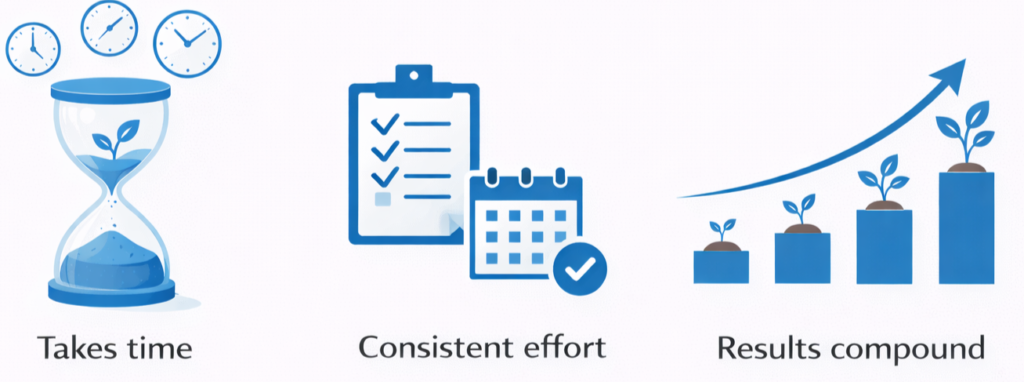
Another affiliate marketing truth: the follow-up content matters more than the first post. Your first blog post or video about something might not make much. But if you create 3-4 pieces of content about it, answering different questions, that’s when affiliate commissions start rolling in.
Think about it like planting seeds. You don’t plant one seed and expect a whole garden. You plant a bunch and see what grows.
Also, don’t sleep on recurring affiliate commissions. A single referral to a software or subscription service can pay you for years. That’s where the real passive income potential comes from.
How to Start Affiliate Marketing: The Real Deal
So after busting all these affiliate marketing myths, what’s actually true?
Affiliate marketing for beginners works, but it’s not magic. It takes time. You’ll need to create content consistently. You’ll need to build trust with real people. You’ll need to actually help them solve problems.
But here’s what makes it worth it: once you build it up, you can make money from work you did months or years ago. That’s the real passive income affiliate marketing promise—but only after the initial work.
You don’t need to be perfect. You don’t need thousands of followers to start. You don’t need to be pushy or salesy. You don’t even need a website if you start with social media or email.
You just need to:
- Choose your platform (blog, YouTube, Instagram, email—pick one)
- Find affiliate programs that match your audience’s needs
- Create helpful content that solves real problems
- Be patient with the 6-12 month realistic timeline
- Focus on building trust over making quick sales
Start small, stay consistent, and focus on actually helping people. The money follows when you get that part right.
The biggest difference between people who succeed with affiliate marketing and those who quit? Understanding these realistic expectations from day one. Now you know the truth—no myths, no hype, just what actually works.