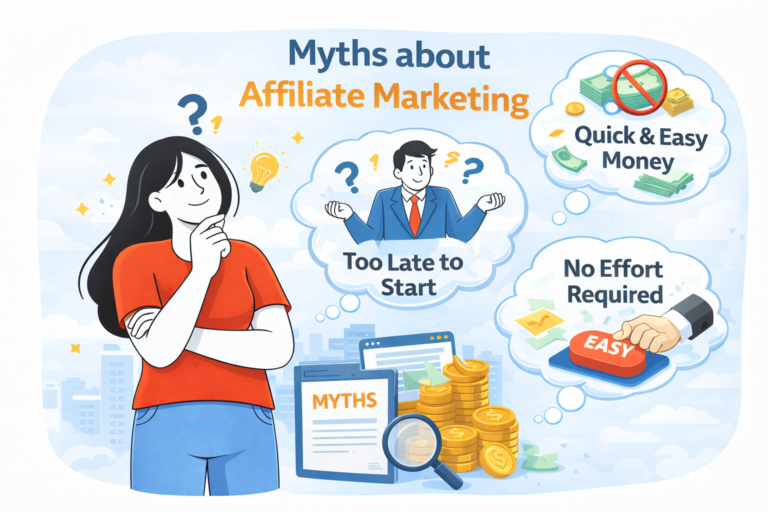

You know what’s funny? Everyone talks about affiliate marketing like it’s either a total scam or an overnight money printer.
Neither is true.
I’ve seen people quit after two weeks because they didn’t make $10,000. I’ve also seen others stick around for months, doing all the “right things,” and still make nothing. The truth sits somewhere in the middle, and it’s way more boring than what the YouTube gurus tell you.
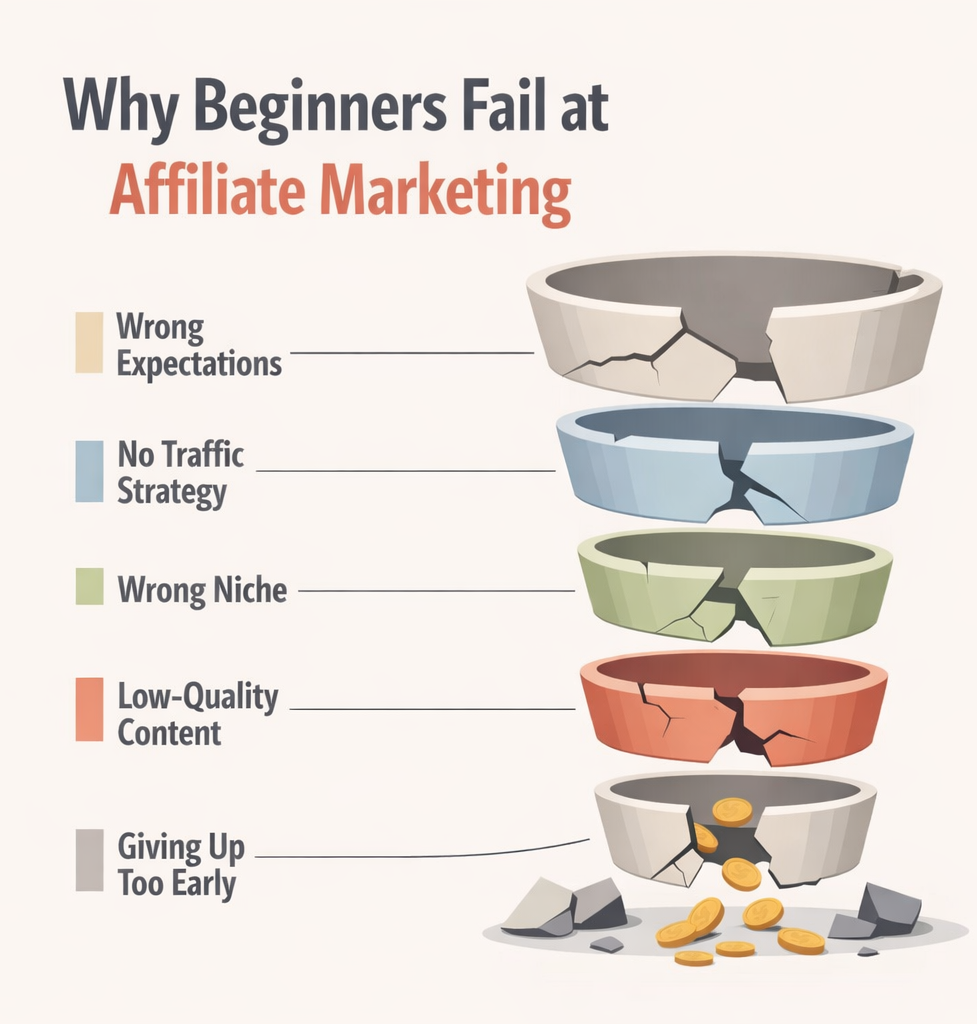
Here’s the thing: why most beginners fail in affiliate marketing. Like, 95% of them. But not for the reasons you think. It’s not because affiliate marketing doesn’t work. It’s not because the market is “too saturated” (people have been saying that since 2015, and new affiliates are still making money in 2026). The real reason is that most people start with completely wrong expectations and zero understanding of what this actually requires.
In this post, I’m going to break down exactly why beginners fail. Not the surface-level stuff. The real reasons I’ve seen over and over again on Reddit, in Quora threads, and from people I’ve talked to who gave up.
If you’re thinking about starting affiliate marketing, or if you’ve already started and you’re frustrated, this will help you see where things actually go wrong.
Why Do Indian Beginners Specifically Struggle with Affiliate Marketing?
Nobody told me this when I started researching affiliate marketing in India. The advice everywhere assumes you’re sitting in the US with a PayPal account and a blog that already gets traffic.
If that’s not you, a lot of things break quietly.
The first one is Amazon Associates India. It’s usually the first program Indian bloggers apply to — easy approval, familiar brand, seems like the obvious starting point. What most people don’t find out until it’s too late: once you’re approved, you have 180 days to generate three qualifying sales. Miss that and your account gets permanently withdrawn. Not paused. Gone. A new blog with barely any traffic will almost certainly hit that wall, and you won’t see it coming.
The second thing is the keyword problem. Most of the affiliate marketing content online is written by bloggers targeting US readers. When you follow their keyword advice — “best laptops under $500,” “top web hosting 2026” — you’re walking into a fight against sites that have been publishing for a decade and have thousands of backlinks. You rank nowhere. The reader you could actually help, someone in India searching in rupees, looking for programs that pay to an Indian bank account, never finds you.
Writing for the wrong reader is the fastest way to get zero traffic as an Indian blogger.
That’s the real failure. Not lack of effort. Not bad writing. Just targeting an audience that was never going to read you in the first place.
They Think It’s Passive Income (It’s Not)
Let me just say this up front: affiliate marketing is not passive income when you’re starting out.
I don’t know who started this lie, but it’s everywhere. “Make money while you sleep!” Sure, technically, once you have everything set up and running, you might make sales while you’re asleep. But getting to that point? That’s active work. A lot of it.
Here’s what actually happens:
- You spend weeks building a website or creating content
- You research products, write reviews, test things out
- You learn SEO, email marketing, social media strategy
- You wait months for Google to even notice your content exists
- You troubleshoot why your links aren’t converting
- You update old content when products change
Does that sound passive? It’s not. It’s a real business that requires real work. Beginners come in expecting to copy-paste some Amazon links and watch money roll in. Then reality hits. They realize this actually takes effort, and they quit.
I saw a Reddit post last week from someone who gave up after three weeks because they “only made $12.” Three weeks. That’s nothing in affiliate marketing time.
They Have No Real Traffic Strategy (Just Hope)
Okay, this is where most people crash and burn.
They build a website. They add affiliate links. Then they just… wait. Wait for what? Traffic to magically appear? That’s not a strategy. That’s hope.
Look, I get it. SEO sounds complicated. Social media feels overwhelming. Paid ads seem expensive. But here’s the deal: if nobody sees your content, nobody clicks your links. It’s that simple.
Most beginners I’ve talked to have no actual plan for getting traffic. They think:
- “I’ll just post on social media” (without understanding algorithms or consistency)
- “Google will rank my site” (without knowing anything about keywords or backlinks)
- “I’ll go viral” (yeah, good luck with that)
Here’s what real traffic strategies look like in 2026:
- SEO: Writing content targeting specific keywords people actually search for
- Pinterest: Creating pins consistently (this still works, especially for certain niches)
- YouTube: Making helpful videos reviewing products or solving problems
- Email list: Building an audience you own (not relying on platforms)
- Reddit/Quora: Genuinely helping people and subtly including your content (not spamming)
Notice how each one requires actual work? That’s the point. You can’t just “hope” for traffic. You have to go get it.
They Choose the Wrong Niche (Or No Niche at All)
This one kills me every time I see it.
Someone decides to do affiliate marketing. They look at what has high commission rates. They pick “make money online” or “weight loss” or “dating” because those pay well. Then they try to compete with sites that have been around for 10 years and have massive budgets.
That’s like starting a YouTube channel about gaming and expecting to compete with PewDiePie. It’s not happening.
The biggest mistake beginners make with niches is choosing based on money instead of these three things:
- Something they actually know about or care about
- Something specific enough that competition is manageable
- Something where people are actively looking to buy stuff
I’ll give you an example. Instead of “fitness” (way too broad), go with “home workout equipment for small apartments.” Instead of “tech reviews” (completely saturated), try “budget laptops for graphic design students.”
See the difference? You’re still in a profitable area, but you’re not fighting giants. You’re finding your corner.
Here’s a question I saw on Quora that stuck with me: “Why isn’t my tech review site making money?” The person was reviewing iPhones and Samsung phones. You know how many massive sites already do that? Hundreds. With huge budgets and years of authority.
Niche down until it feels almost uncomfortably specific. Then you’re probably in the right zone.
They Focus on Quantity Over Quality (Big Mistake)
There’s this weird advice floating around that you need to “publish 100 articles” or “post every single day.”
Look, I’m not saying consistency doesn’t matter. It does. But quality matters way more, especially in 2026. Google’s algorithm has gotten really good at spotting thin, rushed content. And people? They can smell it from a mile away.
I’d rather have 10 really helpful, well-researched articles than 50 rushed ones that barely answer the question. Here’s why:
- One quality article can rank for multiple keywords and bring traffic for years
- People actually read and trust quality content, which means they click your links
- You build real authority instead of looking like every other affiliate site
- Quality content gets shared, linked to, and remembered
I saw someone on Reddit last month complaining that their 200-article site wasn’t making money. I checked it out (they posted the link). Every article was like 500 words of fluff with Amazon links thrown in. No real value. No personality. Just keyword stuffing.
That doesn’t work anymore. Maybe it did in 2015, but not now. In 2026, you need to actually help people if you want them to trust your recommendations.
They Give Up Way Too Early (This Isn’t a Sprint)
Three months. That’s how long most beginners stick around before quitting.
Three months is nothing in affiliate marketing. You’re just getting started. But I get why people quit. They see these screenshots on Twitter of people making $50,000 a month. They think, “I should be there by now.”
No. You shouldn’t. Those people put in years of work. Or they spent thousands on ads. Or they already had an audience from somewhere else. They didn’t start from zero and hit $50K in their first quarter.
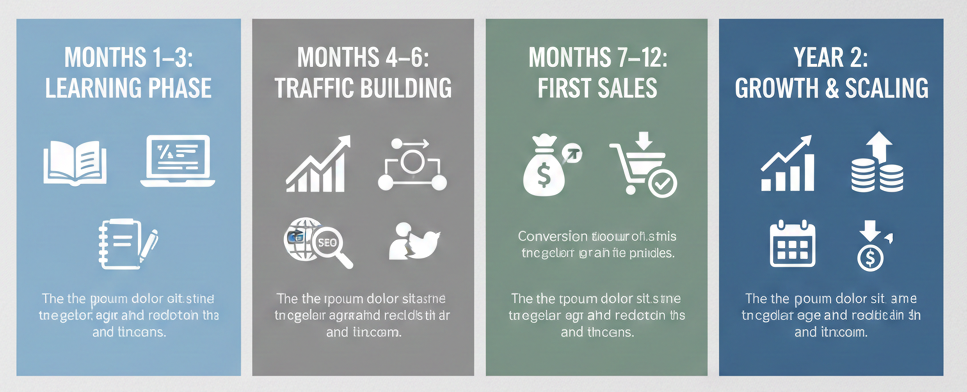
Here’s a realistic timeline based on what I’ve seen actually work:
- Months 1-3: Building your site, creating content, learning the basics (probably making $0-$50)
- Months 4-6: Starting to get some organic traffic, making first consistent sales ($50-$300/month)
- Months 7-12: Content starts ranking better, traffic grows, income becomes more predictable ($300-$1,000/month)
- Year 2: Compounding starts to kick in, you understand what works, income can scale significantly
This isn’t fast. This is not a “make money quick” thing. It’s a “build a real asset over time” thing.
But most beginners expect month 1 to look like year 2. When it doesn’t, they quit and say affiliate marketing doesn’t work. It does work. They just didn’t stick around long enough to see it.
They Copy Instead of Create (Everyone Can Tell)
Let me tell you what doesn’t work: reading someone else’s article and rewriting it slightly to “make it yours.”
People do this all the time. They find the top-ranking article for their keyword, copy the structure, use similar wording, and think they’ve created content. Nope. You’ve created duplicate content that adds zero new value to the internet.
Why would Google rank your copycat article when the original already exists? Why would a reader trust your recommendation when you’re clearly just regurgitating someone else’s thoughts?
Here’s what actually works:
- Add your own experience using the product
- Include unique insights nobody else is talking about
- Test things yourself instead of just reading other reviews
- Take your own photos or create your own graphics
- Have an actual opinion instead of sitting on the fence
I saw a Quora answer recently where someone asked, “How do I write product reviews if I haven’t used the product?” The responses were all saying, “You don’t.” And they’re right. If you’re just making stuff up or copying other reviews, people can tell. And they won’t trust you.
That trust is everything in affiliate marketing. Without it, nobody clicks your links.
They Ignore Email (Missing the Real Money)
Beginners completely ignore email lists. They focus only on getting traffic to their site, making a sale, and that’s it. One-time visitor, one chance to convert. If they don’t buy, they’re gone forever.
Email changes that. You capture visitors, build a relationship over time, send helpful content, and recommend products when it makes sense. Way more effective than hoping someone buys on their first visit.
Think about it. How often do you buy something the first time you see it? Rarely, right? You usually need to see it a few times, read some reviews, think about it. Email lets you stay in touch during that decision-making process.
But most beginners don’t even have an email signup on their site. They’re leaving so much money on the table. If you’re serious about affiliate marketing, you need to start building an email list from day one.
They Pick Products That Don’t Convert (Low Commission Trap)
Okay, this is a trap I see constantly.
Someone finds a product with a 50% commission rate and thinks, “Perfect! High commission!” Then they promote it and… crickets. No sales. Why? Because nobody wants to buy that product. High commission means nothing if nobody’s buying.
On the flip side, some beginners only promote Amazon products because they’re easy. Sure, Amazon converts well because people trust it. But the commission rates are terrible. Like, 1-3% terrible. You need a ton of traffic to make decent money.
The sweet spot is products that:
- People are actively searching for and ready to buy
- Have reasonable commission rates (10-30% is solid)
- Are from companies with good reputations
- Actually solve a real problem
Don’t just chase the highest commission. And don’t settle for the easiest affiliate program if the returns are garbage. Find the balance.
They Forget It’s About Helping People (Not Just Making Money)
Here’s the uncomfortable truth: if you get into affiliate marketing only to make money, you’ll probably fail.
I know that sounds weird. Obviously, we all want to make money. But the successful affiliates I’ve seen genuinely care about helping people solve problems. The money is a byproduct of being helpful.
When you actually care about helping someone find the right product, it shows in your content. You’re more thorough. More honest. More trustworthy. People feel that. They click your links because they believe you’re looking out for them, not just trying to get a commission.
But when you’re just trying to manipulate people into buying stuff they don’t need? That comes through too. And people bounce. They don’t click. They don’t trust you.
I saw a Reddit thread where someone asked, “What’s wrong with my site?” Their product reviews were all 100% positive. Every single product was “amazing.” No drawbacks mentioned. No real comparison. Just hype.
Nobody believed it. Real reviews mention pros AND cons. They help people make informed decisions, even if that means recommending a different product sometimes.
The Real Path Forward
Look, I’m not trying to scare you away from affiliate marketing. It works. People make real money with it in 2026. But it’s not what the gurus make it seem.
It’s not passive. It’s not easy. It’s not quick. It’s building a real business that requires learning, testing, failing, and trying again.
Most beginners fail because they expect something unrealistic, they give up too early, or they never actually learn the skills needed to succeed. They treat it like a lottery ticket instead of a business.
If you want to actually make this work, you need to:
- Commit to at least a year before deciding if it’s working
- Learn one traffic source really well instead of dabbling in everything
- Create genuinely helpful content that you’d want to read yourself
- Build an email list from day one
- Choose products you actually believe in and would recommend to a friend
Affiliate marketing in 2026 rewards the patient, the helpful, and the persistent. Not the people looking for shortcuts.
Are you going to be in the 5% that makes it? That depends on whether you’re willing to do what the other 95% won’t: put in real work, help real people, and stick around long enough to see results.