You’ve probably heard people making money by recommending products online. And you’ve probably also heard you need to spend money to make money, right? How to start affiliate marketing with no money on amazon is a common question most beginners ask.
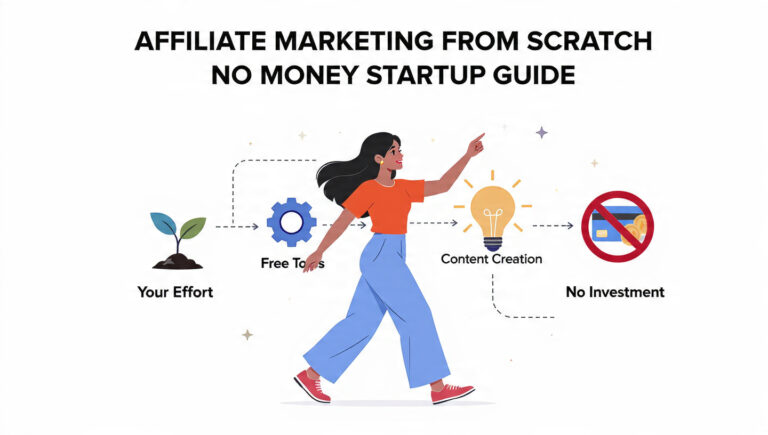
Here’s the truth: Amazon’s affiliate program costs exactly zero dollars to join. No startup fees. No monthly charges. No hidden costs. But here’s where people get confused—while joining is free, you still need a place to share your affiliate links. That’s where beginners panic and think they need to buy a website, pay for ads, or invest in fancy tools.
Look, I’m not going to lie to you. Starting with literally zero dollars is harder than having some budget. But it’s totally doable. I’ve seen people make their first commission without spending a cent. The catch? You’ll use free platforms instead of paid ones, and you’ll trade time for money. You’ll work harder to get traffic without paid ads.
In this guide, I’ll show you exactly how to start Amazon affiliate marketing without spending any money. You’ll learn what the program actually is, how to join, where to share your links for free, and realistic expectations about what you can earn.
You won’t get rich in 30 days. But you can start earning your first few dollars next month if you follow this through.
What Amazon Affiliate Marketing Actually Is
Amazon has a program called Amazon Associates. Here’s how it works in the simplest way possible.
You sign up for free. Amazon gives you special tracking links. You share those links online. When someone clicks your link and buys something on Amazon within 24 hours, you get a small commission. That’s it.
The commission rate depends on what they buy:
- Luxury beauty products: 10%
- Amazon devices: 4%
- Physical books: 4.5%
- Video games: 1%
- Grocery items: 1%
If someone clicks your link for headphones but ends up buying a laptop instead, you still get paid for the laptop. You earn commission on whatever they purchase within 24 hours, not just the product you recommended.
Here’s a real example: Let’s say you share a link to a $30 cookbook. Your friend clicks it but doesn’t buy the cookbook. Instead, they browse and buy a $200 air fryer. You’d earn about $6 (3% commission on kitchen products). You recommended a cookbook, got paid for an air fryer.
The program is completely free to join. Amazon doesn’t charge you anything, ever. They take care of shipping, customer service, and payments. You just share links and collect commissions.
Why Most People Think They Need Money to Start (They Don’t)
People assume you need money because they see advice about buying domain names, paying for website hosting, or running Facebook ads. And yeah, those things help. But they’re not required.
The confusion comes from mixing up “helpful” with “necessary.” A paid website is helpful. Paid ads are helpful. But you can absolutely start without them using free platforms.
The only real investment is your time. You’ll spend hours creating content, sharing links, and building an audience. If you have money, you can speed things up. If you don’t, you just take the slower route.
Think of it like this: someone with a car can drive to the store in 10 minutes. You can walk there in 40 minutes. Both get there. One’s just faster.
Where to Share Amazon Affiliate Links for Free (Your Platform Options)
You need somewhere to post your affiliate links. Here are the best free options that actually work.
YouTube is probably the easiest. You can create videos reviewing products, showing how to use them, or comparing options. Put your affiliate links in the video description. You don’t need expensive equipment—your phone camera works fine. The videos don’t need to be perfect. People searching for product reviews want information, not Hollywood production.
Pinterest works surprisingly well for Amazon affiliates. You create pins linking to Amazon products. Pinterest users are actively looking to buy stuff. You can create pins using free tools like Canva. No need for a website—you can link directly to Amazon (though Pinterest prefers if you eventually have your own site).
Instagram lets you share links through your bio, Stories (if you have 10k+ followers), or link tools like Linktree (free version). You post product photos, quick reviews, or roundup posts like “5 kitchen gadgets under $30.” This works best if you pick a specific niche.
TikTok is growing for affiliate marketing. Short videos showing products or quick tips. Add your link in your bio. The algorithm can push your videos to thousands of people even if you have zero followers. One viral video can drive serious traffic.
Medium is a free blogging platform. You write articles about products, link to Amazon, and publish. Medium has built-in traffic, so people can find your posts through search or Medium’s recommendations.
Reddit requires careful use. You can’t just spam affiliate links or you’ll get banned. But if you genuinely participate in relevant communities and occasionally share helpful product recommendations, it can work. The key is being helpful first, promotional second.
Here’s the honest truth: YouTube and Pinterest give you the best shot at consistent traffic without spending money. They both have built-in search features, so people actively looking for products can find your content.
How to Join Amazon Associates (The Actual Steps)
Joining is simple but there’s one catch you need to know upfront.
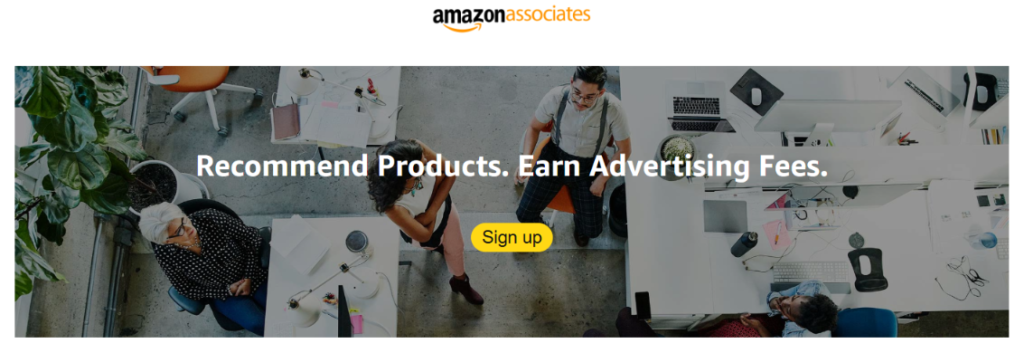
First, go to the Amazon Associates website. Click “Sign Up.” You’ll enter basic info—name, address, email, phone number. All free, takes maybe 10 minutes.
Then Amazon asks about your platform. This is where beginners get stuck. Amazon wants to know where you’ll share links. You need to provide a website, YouTube channel, app, or social media account.
Here’s the catch: Amazon requires you to make at least 3 qualifying sales within 180 days of signing up. If you don’t hit 3 sales in 6 months, your account gets closed. You can reapply, but you need to start over.
This isn’t a big deal if you’re actually creating content. But it means you can’t just sign up and sit on your account. You need to actively promote products.
After approval, you get access to your dashboard. You can generate affiliate links for any product on Amazon. You can also create special links for entire categories or searches.
The application usually gets approved within 1-2 days if you have a real platform. If you’re just starting, create your YouTube channel or Instagram account first, post 2-3 pieces of content, then apply. Don’t apply with a completely empty profile.
Picking Products to Promote (Without Wasting Your Time)
Not all products are worth promoting. Some have terrible commission rates. Some nobody’s buying. Here’s how to choose smart.
Look for products in the $30-$100 range. Too cheap and your commission is pennies. Too expensive and people won’t impulse buy. A $50 product at 4% commission gives you $2 per sale. That’s decent.
Check the Best Sellers list on Amazon in different categories. These products are already selling like crazy. You’re not trying to convince people to buy something weird. You’re showing people products they’re already interested in.
Focus on products you actually know about or can test yourself. You don’t need to buy everything, but if you’re recommending camping gear, you should know something about camping. People can tell when you’re faking it.
Avoid these product types:
- Grocery and food (1% commission, usually not worth it)
- Gift cards (0% commission)
- Super niche products with no search volume
- Products with terrible reviews (you’ll damage your credibility)
Better options:
- Tech accessories (phone cases, chargers, cables)
- Home and kitchen gadgets
- Books and reading lights
- Pet supplies
- Hobby equipment (art supplies, fitness gear, craft tools)
One strategy that works: create “best of” lists. “Best baby monitors under $100” or “Top 5 beginner gaming keyboards.” These posts get consistent search traffic and give you multiple products to promote in one piece of content.
Creating Content That Actually Drives Sales (The Formula That Works)
Here’s the difference between content that makes money and content that wastes your time.
Bad content: “Check out this cool gadget! Link in bio!”
Good content: You show the problem the product solves, demonstrate it working, explain who it’s perfect for, and mention any downsides honestly.
People don’t buy because you said something’s cool. They buy because you helped them make a decision.
For YouTube videos: Start by stating the problem. “Can’t find your keys every morning? Here’s what finally worked for me.” Then show the product solving that problem. Be specific. Show it in use. Talk about what you like and what could be better. End with who should buy it and who should skip it.
For Pinterest pins: Create a simple graphic showing the product with text overlay. Something like “This $19 gadget keeps my cords organized (finally).” Link directly to Amazon or to a simple blog post if you have one.
For Instagram posts: Photo of the product in real use. Caption explaining the specific benefit. Not “this blender is great” but “this blender crushed frozen fruit on the first try—my old one always struggled.” Then add the link to your bio.
The formula is always: problem → this product → why it works → who it’s for → link.
You don’t need to be salesy. Just be helpful. Answer the questions you had before you bought the product.
What Nobody Tells You About Starting With Zero Budget
Starting free means accepting some limitations.
You won’t have fancy tools. You’ll use your phone for photos and videos. You’ll use free editing apps. Your content won’t look as polished as someone spending $500 on equipment. That’s fine. People searching for “best vacuum under $200” care about the information, not cinematic quality.
Growth will be slower. Without paid ads, you rely 100% on organic traffic. That means posting consistently for weeks or months before you see serious results. Your first month might bring 10 visitors. Your third month might bring 100. It compounds over time, but you need patience.
You’ll probably need to create more content than someone with a budget. They can run ads to 1,000 people. You need to create 10 pieces of content to reach 1,000 people organically. More work, same result. You can achieve the same result without money by putting effort and making content.
Here’s what you get in return: No financial risk. If this doesn’t work out, you lost time but not money. And all the skills you learn—creating content, understanding your audience, SEO basics—transfer to other ways of making money online.
Realistic First-Month Expectations (Actual Numbers)
Let’s be brutally honest about what to expect in your first 30 days starting with no money.
If you post 3-5 pieces of content (videos, pins, posts) and consistently share your links, here’s realistic:
- Traffic: 50-200 visitors clicking your links
- Sales: 1-5 purchases (maybe zero)
- Earnings: $3-$20
That’s not life-changing money. But it proves the system works. Month two might bring $30. Month three might bring $80. It builds slowly.
I’ve seen people make their first sale within a week. I’ve also seen people take 6 weeks. It depends on your niche, content quality, and honestly, some luck.
The 90-day reality check: If you’re posting regularly, you should see at least a few sales within 90 days. If you have zero sales after three months of consistent effort, something’s wrong. Either your content isn’t helpful enough, you picked the wrong products, or you’re not getting traffic to your links.
This is not a get-rich-quick thing. It’s a build-something-real-over-time thing.
Common Mistakes That Kill Beginner Accounts
Amazon will close your account if you break their rules. Here’s what not to do.
Don’t click your own links. Amazon tracks this. If you’re buying products through your own affiliate links to earn commission, they’ll ban you. It’s against the rules and they catch it.
Don’t promise specific results. You can’t say “This will cure your back pain” or make health claims. Stick to “This helped my posture” or “Made my desk setup more comfortable.”
Don’t email your affiliate links directly unless you have permission. Sending unsolicited emails with affiliate links is spam and violates Amazon’s terms.
Don’t post bare affiliate links on Facebook. Facebook hates them and often blocks them. If you must use Facebook, send people to your content first, then to Amazon.
Don’t forget disclosure. You legally need to tell people you earn commission from purchases. Add something like “I earn a small commission if you buy through my links at no extra cost to you” to your posts, descriptions, or bio.
Breaking these rules gets your account shut down. And once Amazon bans you, it’s extremely hard to get reinstated.
The Strategy That Actually Works Long-Term
Here’s what separates people who make $50/month forever from people who scale to $500+ per month.
Consistency beats perfection. Posting one video every week for 12 weeks beats posting one “perfect” video and then nothing for two months. The algorithm and your audience reward regular content.
Pick one platform to start. Don’t try to be on YouTube, Pinterest, Instagram, and TikTok simultaneously. Master one platform first. Get comfortable creating content. Build a small audience. Then expand.
Document your own journey. Buy products you’re actually using and review them honestly. Your first-hand experience is more valuable than regurgitating Amazon descriptions. People connect with real reviews.
Focus on evergreen content—stuff that stays relevant. “Best wireless earbuds for gym workouts” works all year. “Top Christmas gifts 2024” only works one month. Build a library of content that keeps working.
Track what’s working. Amazon gives you reports showing which products people bought and which links got clicks. Double down on what works. If your kitchen gadget videos get way more views than tech reviews, make more kitchen content.
Your audience is your real asset. The affiliate commissions are just the first step. Once you have people watching, reading, or following you, that’s when things get interesting. You can promote other affiliate programs, create your own products, or sell sponsorships. Amazon Associates is the starting point, not the finish line.
Start From Here
Amazon affiliate marketing costs nothing to start. Sign up for Amazon Associates, pick a free platform like YouTube or Pinterest, create helpful content showing products that solve problems, share your affiliate links, and wait for people to buy.
Your first month won’t make you rich. You might earn $10. You might earn zero. But if you keep creating content and genuinely help people make buying decisions, the earnings compound. Month three looks better than month one. Month six looks better than month three.
The people making real money from this didn’t get there in 30 days. They posted consistently for months, learned what their audience wanted, and kept showing up even when the first few weeks felt slow.
You can start today with the phone in your pocket and zero dollars. Whether you actually do it comes down to whether you’re willing to trade time and effort for a slow build instead of quick results.